

Doctorina has arrived on Telegram — and it looks like one of the first notable cases of a specialized medical LLM stepping out of the familiar app ecosystem and into an everyday messenger. The result is that an AI consultation stops feeling like a “separate digital product” and becomes a normal chat: open the dialogue, get help. For the digital health market, this is a meaningful shift in format, not just another channel launch.
But can messengers become a new mass entry point for AI-powered medicine? Will the bet on an environment where the audience already lives and communicates pay off? – In this interview we are trying to understand where the boundary lies between convenience, responsibility, and the quality of medical guidance in a “quick chat” format.
We previously spoke with the Doctorina team about risks and inequalities in digital health. Now the story has taken a practical turn: expansion into Telegram as an attempt to lower barriers to entry and reach people who rarely become the “ideal app user.” We discussed this with Hanna Melini, Co-founder and Chief Medical Officer at Doctorina.
2Digital: Why Telegram? When you considered where to bring Doctorina — a standalone app, WhatsApp, Telegram, the web — what ultimately convinced you that Telegram should be a dedicated channel rather than just “one more access point”?
Hanna: We evaluated every channel with the same question in mind: where can we reach people quickly and reliably while preserving safety and privacy? Telegram stood out for three practical reasons.
First, the distribution and adoption dynamics: Telegram has enormous global reach in regions where people rely on lightweight, cross-platform messengers rather than installing another app.
Second, the product capabilities: The bot API, and image and voice-note limits let us collect structured inputs (photos, PDFs, voice notes) fast and without friction.
Third, user expectations: Telegram users expect fast, asynchronous interaction, which fits the kind of guidance we want to provide.
So this wasn’t about “one more checkbox”. It was a strategic channel where we can deliver the same clinical rigor with much lower access cost.
2Digital: What’s new that you can offer in Telegram now?
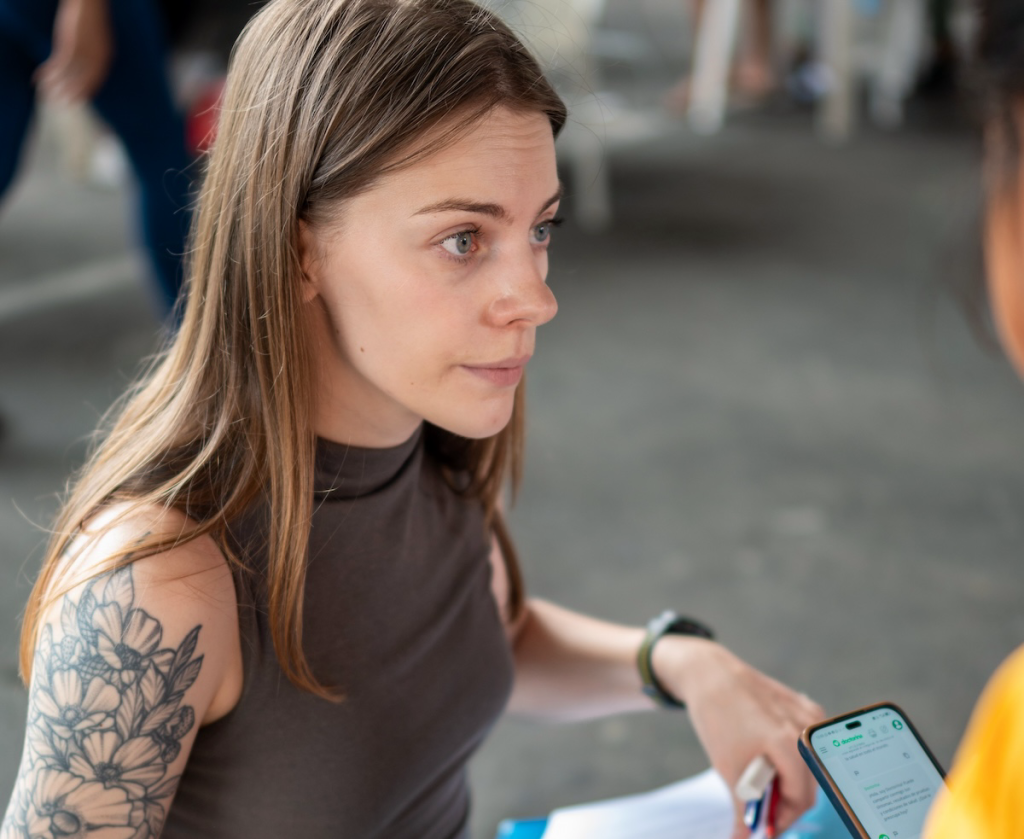
Hanna: Telegram is a real product expansion, not just marketing. Functionally, it supports the core features people need: multimedia intake (photos, voice, documents), guided clinical questioning, rapid structured reports, and downloadable summaries. Strategically, we see Telegram as an incredibly low-friction entry point that for many users is the primary interface.
2Digital: Telegram is built around quick messages, emojis, and voice notes. How do you balance this familiar “messenger-style” UX with the strict requirements of medical history-taking — structured questions, complete answers, and no room for ambiguity?
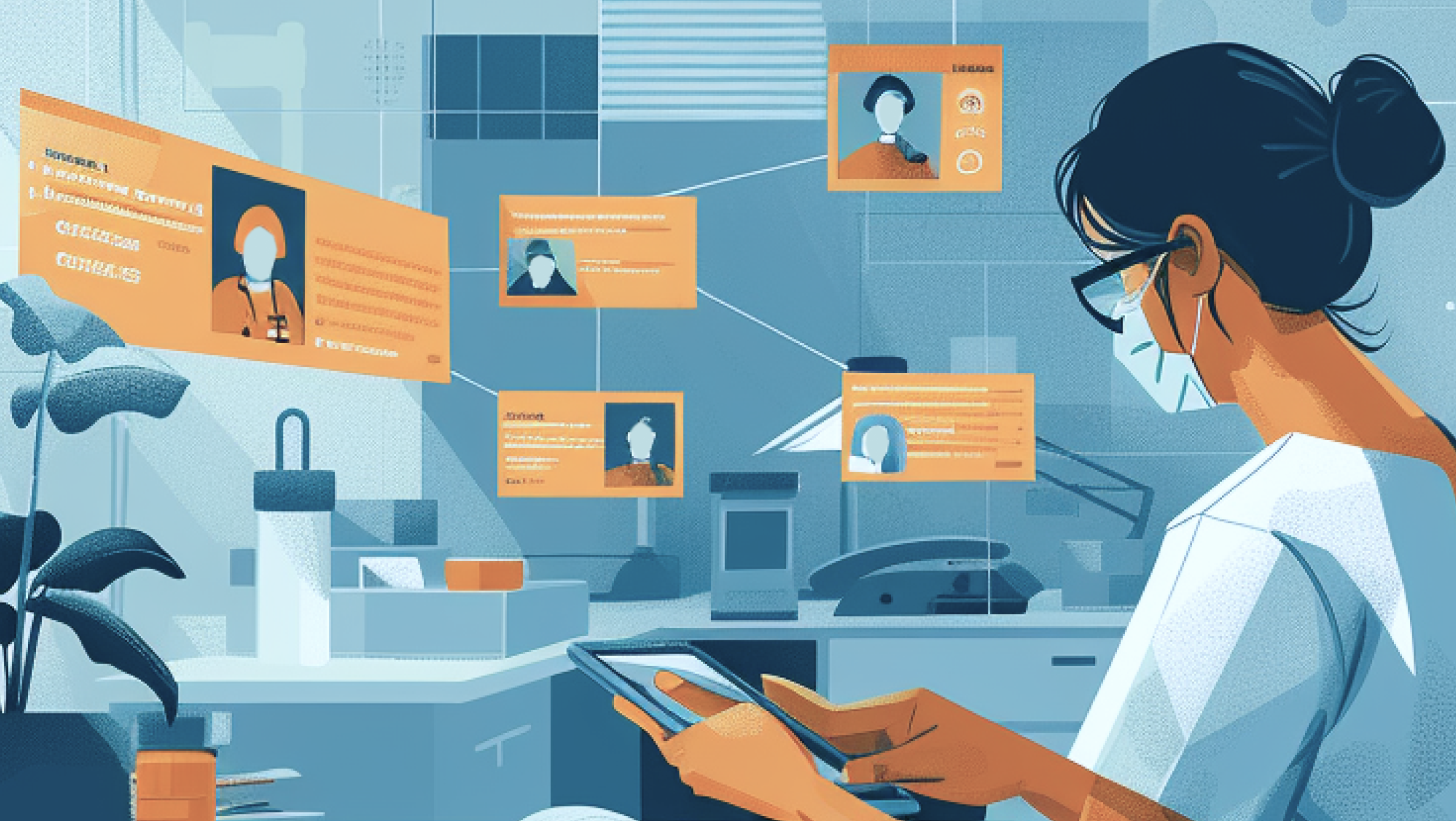
Hanna: We treat the messenger interface as the wrapper, not the clinical process. The UX is conversational (users send free text, photos, voice notes…), but the system translates those inputs into structured medical data.
Human oversight is built in as well: clinicians review cases on a rolling basis to ensure clinical accuracy. Our goal is to keep the experience natural and fast while maintaining the level of precision and data quality that medical standards require.
2Digital: Users often perceive a bot in a messenger as a real doctor. How do you handle — both technically and ethically — the risk that users might think, “I’ve already been told what I need, I don’t have to see a doctor,” given that Doctorina does not officially replace professional medical care?
Hanna: This is one of the most sensitive risks, and we approach it on three levels: clarity, escalation, and accountability.
-From the very first interaction, we explain what Doctorina is (a medical guidance system) and what it is not (a replacement for in-person consultations). Every new chat includes that disclaimer.
-Technically, we apply conservative thresholds. If a case falls into a red-flag category, the system triggers an emergency response with explicit instructions to seek urgent care.
-Ethically, clinicians review automated outputs and audit cases to adjust rules, thresholds, and language. We would rather be overly cautious than risk delaying care.
Doctorina’s role is to help people reach the right next step faster. Not to skip it.
2Digital: In what situations do you internally say, “This is something we will never do on Telegram”? Are there specific conditions, acute cases, pediatrics, psychiatry, medications — where does your boundary lie in terms of what is appropriate for a social-media-based format?
Hanna: Telegram is a powerful channel for first consultation and continuity, but when the appropriate care needs to happen in person, we recommend that path clearly. In fact, every diagnosis has a dedicated section for “Follow-up with a doctor” indications.
2Digital: Recently, in an interview with Dr. Vladimir Pikirenya, we heard the idea that major players will eventually absorb all niche medical startups. How do you view this? Can expansion into social networks and messengers be a way to maintain independence and market position?
Hanna: Large platform consolidation is real, and it’s coming faster than many expect. But there is a second trend that isn’t talked about enough: the democratization of health access. We made a strategic choice early on related to that objective: there will always be a free version of Doctorina, with the best clinical precision we can achieve. That sets us apart from many startups whose primary engine and focus is paid conversion. Our goal is impact first, then sustainability.
This approach opens doors. When you serve everyone (not only affluent app users), you become relevant to governments, public health, and communities that have been invisible in most medical datasets. Those populations are the majority of the world, yet they’re almost absent from current training data. If we can reach them, we get a truer picture of global health instead of a biased slice of it.
That is also why we expand into channels like Telegram. We don’t want people to adapt to us; we go where they already are. No downloads, no barriers. Just access.

So yes, big players will continue to consolidate the market. But they can’t own the trust or the mission of giving reliable medical guidance to people who otherwise have none. In that space I see our advantage and a perspective to stay independent.
2Digital: If tomorrow the largest EMR platforms, insurers, and hospital networks integrate their own medical LLM-agents, why would doctors and clinics still need separate specialized startups?
Hanna: Large platforms will absolutely integrate medical LLM-agents, but that doesn’t make specialized startups irrelevant. Our value remains clear in two areas:
-Clinical focus & iteration: We update pathways in weeks, not years. That agility translates into better up-to-date advice.
-Access & inclusion: We serve everyone — not just insured, urban users. A permanent free tier and presence in channels like Telegram allow us to reach populations that are invisible in most medical datasets.
Ultimately, large platforms will provide scale. Specialized startups will continue to provide what truly changes outcomes: community trust and democratized access. Both are necessary, but they do different jobs.