


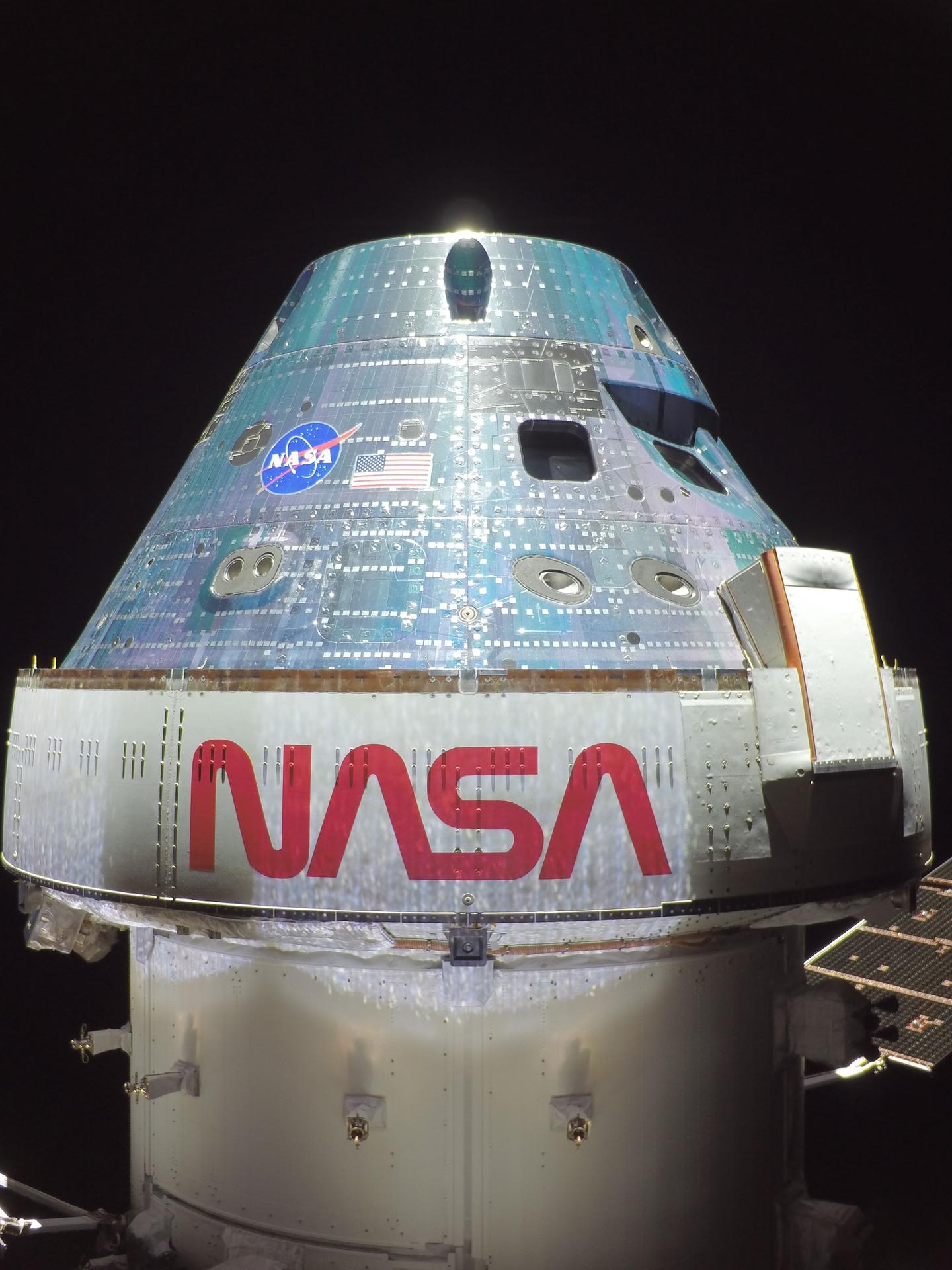
The four-person crew of the Artemis II mission has spectacularly pushed the boundaries of human space exploration. According to NASA, the astronauts reached a peak distance of exactly 406,764 kilometers from our planet. This achievement exceeds the legendary record set in 1970 by the Apollo 13 spacecraft by more than 6,000 kilometers.
The Orion spacecraft reached its farthest point from Earth at precisely 7:07 PM ET on Monday, April 6. The most demanding phase of the flight occurred as Orion slipped behind the Moon, cutting off all radio contact with mission control for a planned 40-minute window. Just before entering the zone of silence, pilot Victor Glover radioed back: “As we prepare to go out of radio communication, we’re still going to feel your love from Earth. And to all of you down there on Earth and around Earth, we love you, from the Moon. We will see you on the other side.” When the signal finally returned, astronaut Christina Koch summed up the tense wait with a brief: “It’s so great to hear the Earth again.”
Passing within just a few thousand miles of the lunar surface, the astronauts witnessed a total solar eclipse. The crew spent this time documenting the far side of the Moon – an area invisible from Earth characterized by vast craters and lava plains – using digital cameras and high-resolution sensors mounted on the ship’s panels. During the flyby, mission commander Reid Wiseman requested names for two observed craters. One was dubbed “Integrity” – in honor of the capsule itself – while the other was named “Carroll” to commemorate the commander’s wife, who passed away in 2020.
The crew’s achievements did not go unnoticed by the White House. Following the maneuver, President Donald Trump contacted the astronauts to offer his congratulations, stating: “Today, you’ve made history and made all America really proud, incredibly proud.” Wiseman responded by emphasizing the magnitude of their findings: “We saw sights that no human has ever seen, not even Apollo, and that was amazing for us.”
Orion is currently on a return trajectory. After a few more days of routine testing, the crew will face the mission’s final hurdle: re-entering Earth’s atmosphere at 25,000 miles per hour before splashing down in the Pacific Ocean.
The prospect of a crewed landing today differs significantly from the missions of the 1970s as NASA no longer views the Moon as a finish line, but rather a stepping stone for further expansion. Mastering the Moon – through permanent orbital stations and the exploration of surface resources – is intended as a crucial proving ground. The agency plans to gain the necessary experience there to eventually take the most difficult step in history – safely sending the first humans to Mars within the next two decades.