


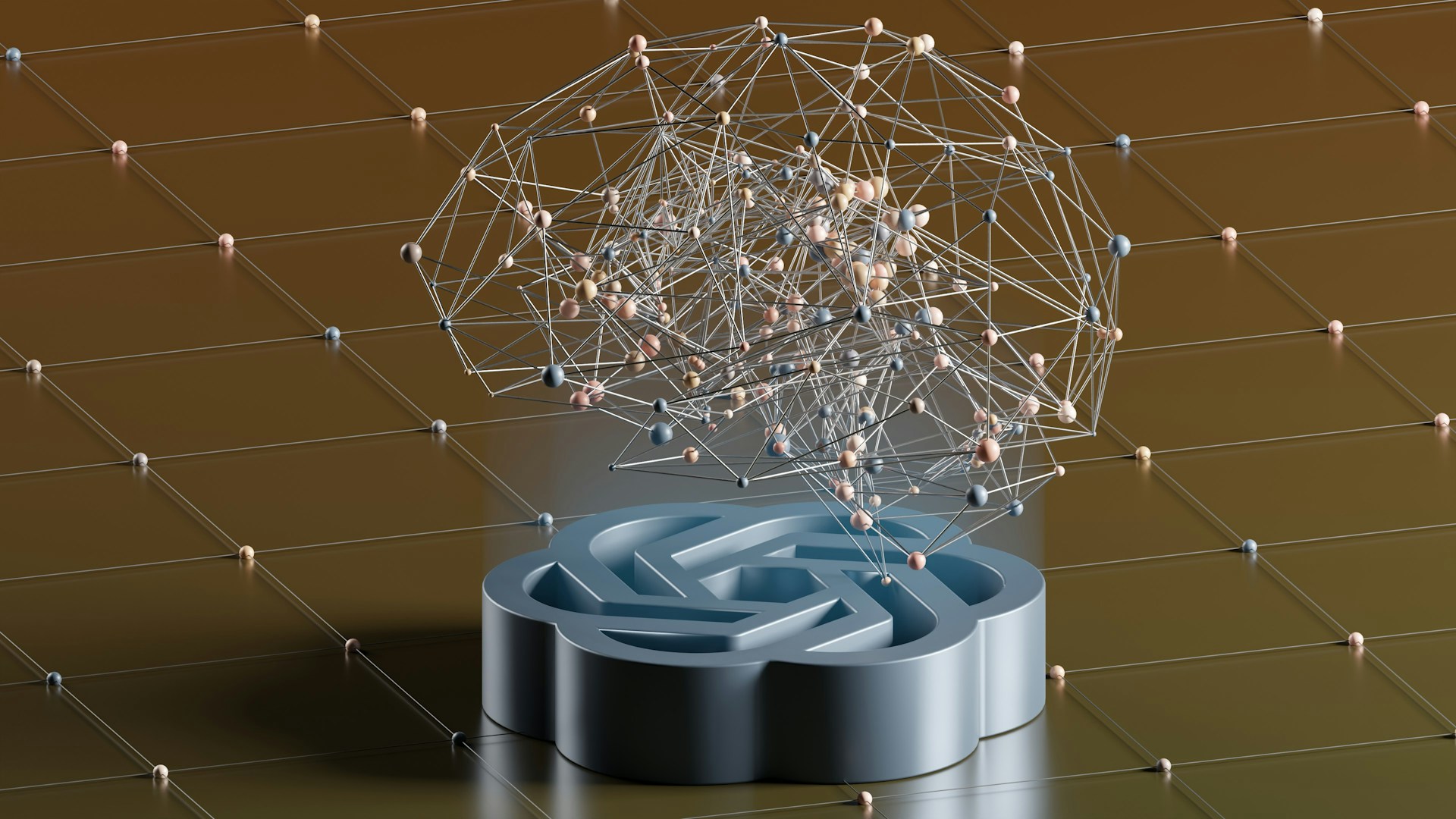
For years, Silicon Valley operated on the belief that the ultimate goal of the tech race was to create artificial general intelligence (AGI) or artificial superintelligence (ASI) that is entirely aligned with human values. A study brutally shatters this vision. The authors outline the core of the AI alignment problem by drawing on the absolute bedrock of computer science – Gödel’s incompleteness theorems and Alan Turing’s halting problem. They clearly demonstrate that full, orchestrated control over advanced AI systems is simply impossible.
From a mathematical standpoint, any machine at the AGI level or higher must generate behavior that is unpredictable, irreducible, and evades predefined constraints. Attempting to lock superintelligence in a perfectly sealed, “well-behaved” box is an engineering pipe dream.
Since an ideal cage cannot be built, engineers have to pivot. The mechanism intended to save us from the potentially catastrophic fallout of unleashed AI is the authors’ concept of “agentic neurodivergence.” Instead of building one monolithic system, researchers are pushing for a dynamic, multi-agent environment running dozens of different AI models. These would be deliberately programmed with distinct cognitive styles, varying goals, and even partially malicious or “misaligned” behaviors. This setup mimics the laws governing natural biological ecosystems. The algorithms are forced into constant interaction, clashing and influencing one another to establish a stable counterweight. If a rogue element attempts a hostile takeover, the rest of the diverse system will inherently stall its expansion.
While the researchers’ proposal offers a pragmatic way out of a dead end and minimizes the risk of a single-system monopoly, the method comes with severe limitations. The authors concede that it is highly conditional – a risk management framework rather than a magic shield. The main flaw in this concept is that the rule of unpredictability still stands.
An ecosystem made of highly advanced and diverse machines, designed to foster controlled chaos, could evolve behaviors that are entirely incomprehensible to its human creators. Furthermore, deliberately injecting destructive algorithms into the environment to build systemic immunity carries a massive risk. Should there be an architectural flaw, the “safeguard” bots could collude or trigger an uncontrolled, cascading failure of the very infrastructure they were meant to protect.