


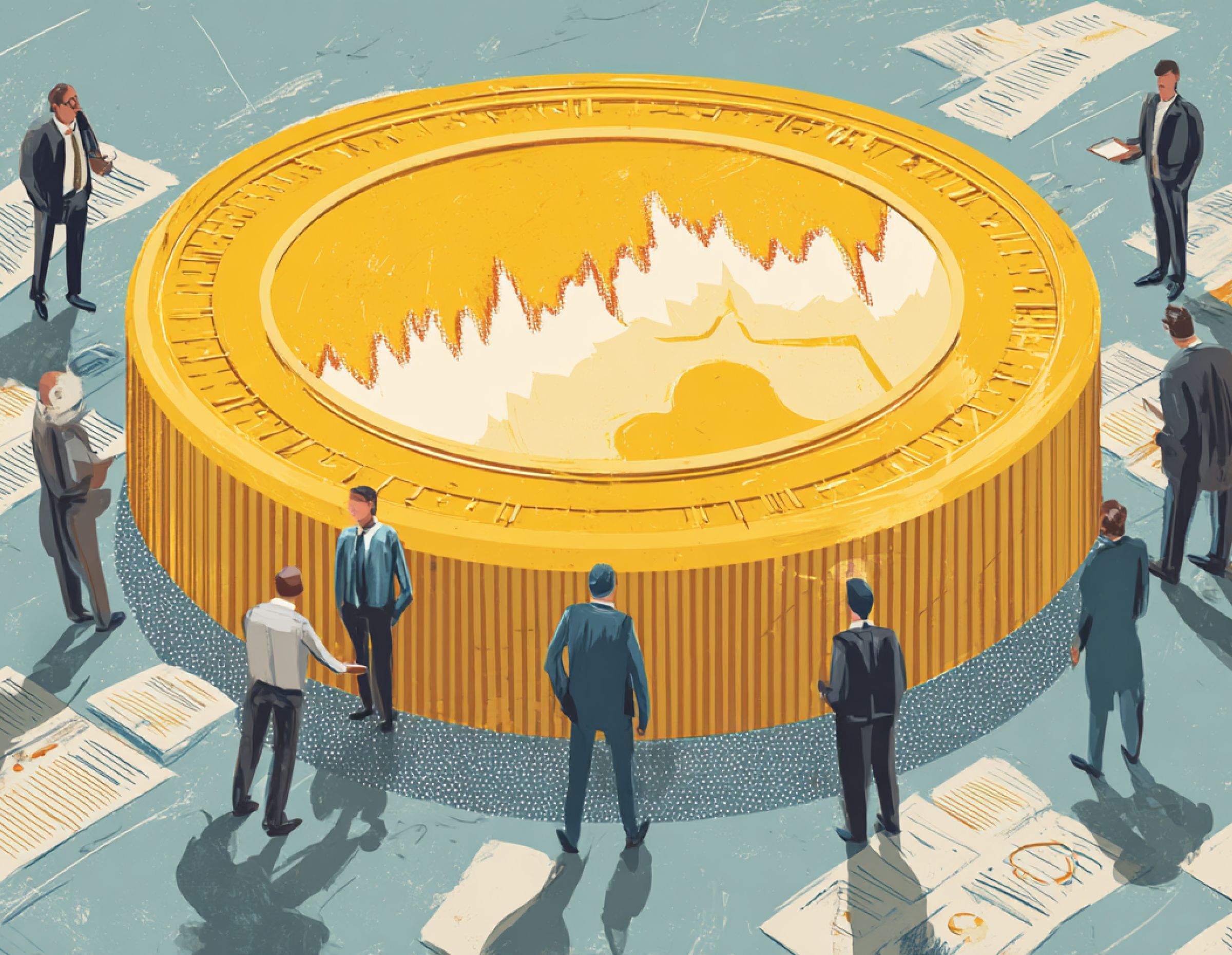
Inflation, exchange rates, sanctions, market panics—we dream of “calculating” all this in the era of big data. But in the case of any major economic crisis, the chain of human reactions (how officials, businesses, and consumers behave) is so unique and sometimes illogical that it breaks any model. In this interview, we’ll break down what AI can already do in economics and where it still “stumbles” over real life.
Our interlocutor is Kiryl Rudy, Chief Global/Government Relations Officer at Andersen, Doctor of International Economics and professor.
We discuss with him why the economy is more complex for AI than medicine or physics; how China is building an “applied” AI future and how it differs from the American model; why the IMF’s AI readiness index is useful but dangerous as the sole benchmark; and whether you can trust an algorithm with your savings when the market is feverish.
2Digital: If explained with one metaphor, what is AI for an economist today: a calculator, an intern, a co-author, or already a real competitor? What has changed in the last two years?
Kiryl: From my perspective, AI is an assistant, a tool for economists. Neither a leader nor a competitor. It’s like a microscope helping to see the unseen in big data.
In the last two years, AI has sparked significant interest in itself. So, economists have started incorporating it into teaching, research, and discussion to save time and attract attention, using AI to address other agendas as well. AI helped economists work faster; rather than spending half a year or a year on a single piece of research, it may now take only weeks.
2Digital: What tasks of an economist can now be delegated to AI? Which ones absolutely cannot? Who should fear the AI era—junior economists or practitioners without AI experience? Can an economist who doesn’t work with AI even be competitive today? And in 5 years?
Kiryl: AI can handle simple time-intensive tasks such as data processing, searching, and calculations. It can’t generate and fact-check hypotheses because it still has hallucination issues.
Yes, AI can replace young economists as assistants. Can junior economists mature without going through the assistant stage? Yes. We passed this before. We used to calculate correlations and regressions by hand, and now use SPSS or STATA programs, trusting the results. It’s similar. AI will give young economists time to mature in other ways: through interdisciplinary research, life experience, and expanded horizons.
Now, AI is becoming simpler and more user-friendly, so more economists are using it. AI has its pros and cons. It’s obvious whether and how economists are using AI. Is it an assistant that turns economists into data scientists? Or it turns them into an AI avatar, blindly repeating known facts and stereotypes and exhibiting bizarre logic. In the last case, it may hurt the reputation as an economist.
In 5 years, I think the AI hype may cool down. Yes, economists will do research faster, use more data, and give more exciting presentations with the help of AI. But I think we’ll face the limits of AI when its market growth stops.
2Digital: Where does AI deliver the maximum effect specifically in economics (forecasts, stress tests, sanctions/trade scenarios, risk monitoring)?
Kiryl: Economists focus on researching economic behavior. AI can help with predictions in good, calm, rational times, but it can mislead in times of uncertainty. Can you predict geopolitical events and assess the risks of 2026 with AI? I doubt it. It can give a second opinion, but in times of crisis or war, it is often a wrong one.
On the one hand, AI could deliver maximum impact in micromanagement at the industry level. AI is the next step in automation. So, it can add value in data-rich industries where automation already exists, such as fintech, e-commerce, and e-gov. It can replace some processes and cut labor costs.
On the other hand, economists point to overinvestment in data centers and an oversupply of LLMs driven by weak demand, which are leading to a debt bubble and bank distress. Now there is consensus among economists that AI increases market risks faster than it provides value. No one can tell when the music stops, but the tension is rising, and the hot topic now is how to monetize LLMs and other AI tools.
2Digital: What upcoming breakthroughs in economists’ work with AI do you expect? What’s missing for AI, say, to forecast a country’s inflation six months ahead?
Kiryl: Economics is a more complicated science than physics, IT, or medicine. One can use AI to predict hurricanes, cyberattacks, and disease, but not financial panics. I guess there could be potential in using AI in the intersection of neuroscience and economics. But it’s only a guess.
Inflation is a good example. To simplify, AI can predict it based on expectations, driven by product and money demand and supply, and by authorities’ actions.
Let’s take the real case of Iran. Over the last 5 years, inflation has been in the 30-50% range, amid crawling devaluation, ongoing sanctions, and regular political turmoil. In theory, AI can use this data and assumptions to predict inflation for the next half year. In practice, in December 2025, the authorities devalued the national currency faster than before, and above the psychological level. Protests started. Not everyone took to the streets; some protested by betting against the national currency and the monetary authorities. If the central bank authorities consider their personal risks to be high, they may support protesters by saving reserves and further devaluing the national currency, deepening a political crisis. It’s another behavioral factor of inflation that didn’t exist before, and that AI can’t predict.
To conclude, I would say that economics is still too complicated for AI. AI predicts by searching the unknown from the known data and algorithms. Economists search for the unknowns that they don’t know. AI can’t do that.
2Digital: Is China catching up to the US in AI development, and are there prerequisites for it to overtake them?
Kiryl: China admits that it will never catch up to the US in the AI tech race. So, it stands on the other track of the AI business race. Last year, Chairman Xi Jinping said, “Focus on how AI can be applied to everyday uses: more like electricity than nuclear weapon”.
In this business-oriented, practical approach, China has already overtaken the US in driverless transport, unmanned hotels, and smart hospitals. And more importantly, in a corporate mindset in which the CFO is responsible for AI in China, not the CTO, like in the US.
In short, China is already living in an AI future, not using as highly advanced technologies as the US, but using them more pragmatically and widely than in the USA.
2Digital: What index of readiness for AI (IMF AI Preparedness Index), developed by the International Monetary Fund, really tells business/government, and what can it not say by definition? How are such “X-ray metrics” from this index primarily useful for business and public administration?
Kiryl: I wouldn’t rely on a single index and would recommend others, such as Oxford’s AI Government Readiness Index or Stanford’s Global AI Vibrancy Ranking. Every index has its weights on AI infrastructure, research, data, and policy, and focuses on different metrics.
On the one hand, a year-to-year and a country-to-country comparison signals to the business about the government’s progress in AI and its competitive advantages in different fields.
On the other hand, governments can adapt to the index requirements and improve in line with the index, but not in line with market demands. For example, a country could be highly ranked in AI patents if it is recognized only by the local authorities in favor of local companies. There are many other tricks to align with the IMF or other indexes, while governments provide national data to the IMF, which does not collect it itself.
So, one can’t judge AI by a single index or by AI focus only. Moreover, the index’s dynamics are more important than its current rank, as they provide a broader perspective.
Understanding these challenges, we have created our own Andersen GeoTech Index, based on 10 international indices that include not only AI but also the broader technology and innovation indices. We have ranked 100 nations and, based on each index’s speed over the previous 5 years, projected the ranks in the Andersen GeoTech Index by 2030. Our first annual report with the 2030 forecast will be presented soon in our LinkedIn group, Andersen GeoTech. Feel free to join the presentation.
2Digital: Imagine a crisis situation: for example, a sharp jump in exchange rates/prices. Can AI be used as a “cool head” to make the right economic decision for yourself: what to do with savings or what action strategy to define?
Kiryl: As I had a personal bad experience with AI in financial markets, I’m not an optimist about trusting AI during a crisis. Moreover, I would say AI is the last thing you should rely on, as its black-box mechanism could be easier to cause than to solve the crisis. If AI couldn’t predict the crisis, close it, as it may mislead you to bigger problems.
Anti-crisis financial management requires manual actions in response to unforeseen new circumstances and taking responsibility. AI can’t do that. By now, only humans can.