


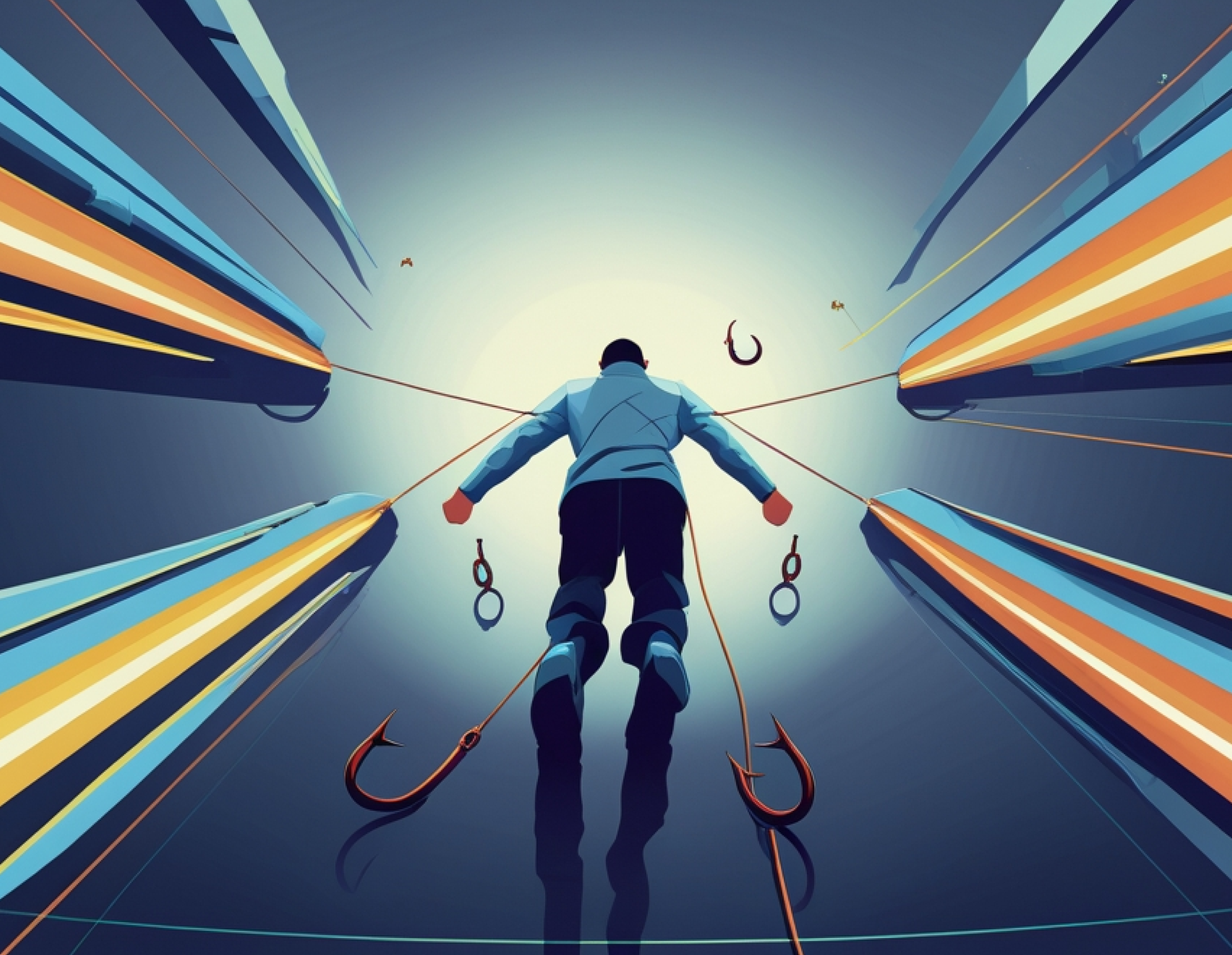
Not long ago, the internet mostly hunted for our attention with curiosity, novelty, and the lure of a click. Now it increasingly catches us through irritation, anger, and outrage. Oxford University Press named rage bait its Word of 2025, noting separately that usage of the term tripled over the year. Oxford University Press defines rage bait as content deliberately made irritating, provocative, or offensive to trigger anger in people — and thereby drive reach, comments, and traffic. Today we take a close look at this phenomenon.
For a long time, social media toxicity was discussed mostly as a collateral damage from platform design. Then it turned out that outrage isn’t just a user emotion. It holds attention longer, provokes responses more readily, accelerates discussion more effectively — and as a result, it’s profitable both for individual creators and for platforms that reward any high-engagement content. Research by William Brady’s team showed that moral outrage on social media can be literally reinforced by feedback: when this style earns approval, people are more likely to use it again.
How Social Media Leaves Us With the Brakes Off
Algorithms are only part of the story. The digital environment changes several fundamental parameters of communication at once: it weakens the usual social inhibitions, blurs audience boundaries, distorts self-presentation, and lowers the cost of mistakes. John Suler described this in detail as the online disinhibition effect.
On top of this comes another feature of social media: it offers near-unlimited control over how you present yourself to others. A review on self-presentation in social media highlights that audience composition and the so-called context collapse — when friends, colleagues, relatives, and random followers all end up in the same mixed crowd — strongly shape which version of yourself you choose to show.
That said, social media doesn’t necessarily create a second personality. Research paints a more nuanced picture. A study in Nature Communications on a sample of 10,560 Facebook users found that the closer a person’s online self-expression is to their real personality, the higher their subjective well-being; strong idealization and a wide gap between online and offline identity correlate with lower life satisfaction. A more recent 2023 study suggests that people generally tend to perceive their online and offline selves as fairly similar. It’s usually not a story of two different people, but a shifted accentuation: someone becomes bolder in some circumstances, more aggressive in others, more performative somewhere else.
That’s why the conversation about rage bait isn’t only about manipulation tactics. It’s also about how people function in an environment where emotion gets rewarded faster than thought, and bluntness is often more profitable than precision. We discussed why this happens — and whether it can be resisted — with PhD, psychiatrist Uladzimir Pikirenia.
“First You Write Something — Then You Start Thinking”
2Digital: Why do so many people on social media allow themselves things they would never do in real life? I’m talking about harsh statements, blunt criticism, bullying, and everything that comes with it.
Uladzimir: This topic emerged almost as soon as the internet and social media did. Especially in the days before any regulation existed — when forums and anonymous chats were mushrooming — the level of aggression was noticeable and quite high.
For the most part, in the 1990s, people didn’t pay much attention to what was happening, because back then the internet was the domain of geeks, still a relatively small group. But once it became a mass phenomenon, not noticing became very difficult. Today, it’s hard to find anyone over 40 who doesn’t have a social media account. If people who spent time on social media used to be considered oddballs, now it’s almost the person without social media who’s the oddball.
It’s also worth noting that people behave differently on different platforms — depending on the platform’s core concept and on what kind of people surround them there.
On one type of network, a person is surrounded by acquaintances and friends they’ve known for years — a virtual circle of friends, so to speak, with whom they interact and want to keep interacting.
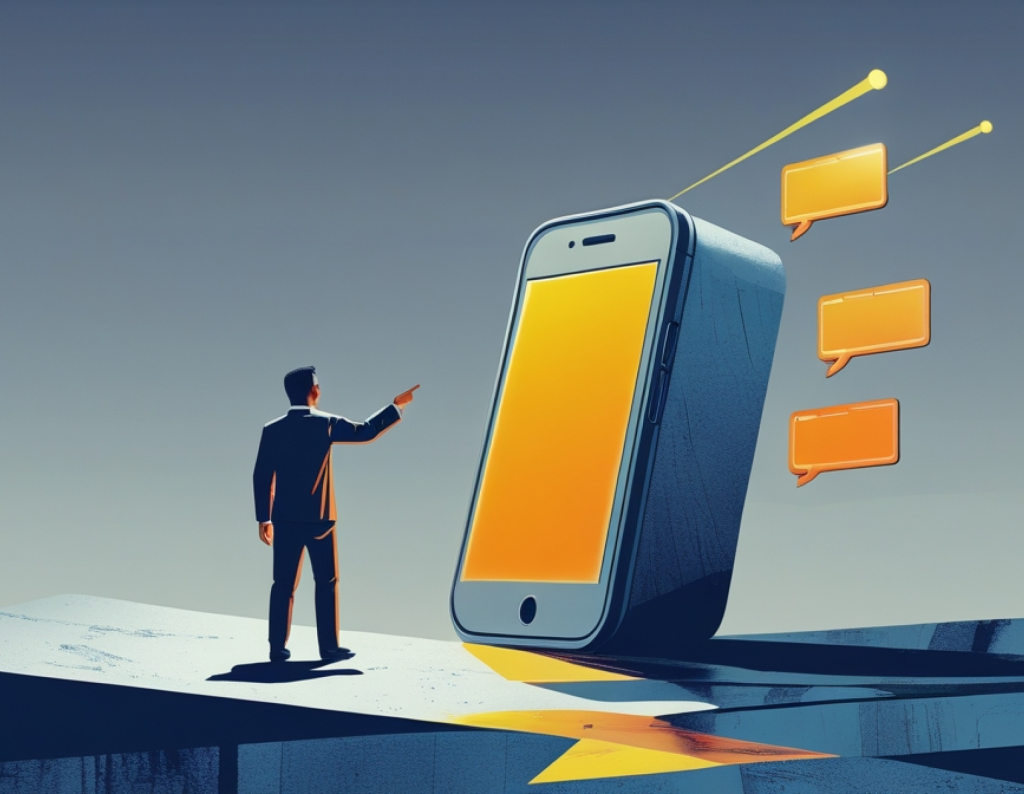
It’s a different matter on a network where a person writes and their posts are read by people who don’t know them at all — and where they, in turn, read people they don’t know either. A large volume of such contacts with strangers shapes an entirely different kind of behavior.
Then there are professional networks, which are essentially vanity fairs. They resemble a formal reception more than anything else — one where attendees behave as stiffly as possible in their interactions with others.
So when people talk about some kind of unusual online behavior, they most often mean the networks where a person feels largely unacquainted with those around them, and the probability of ever meeting those people in real life approaches zero. In that case, many people feel no internal need to maintain close connections — including no need to show empathy, to think about the consequences of what they say or write.
2Digital: In the early days of social media, the assumption was that these platforms would serve as a window to the world for people who struggled to socialize, to connect with others. Did that actually happen?
Uladzimir: I’d say that idea was largely a marketing pitch for promoting social networks. Conceptually it sounded reasonable, and to some extent it reflected reality. But you could really talk about something like that at the very dawn of the internet — when it was a tight-knit community of geeks who knew each other, bound by shared ideas and, to some degree, shared values.
All of that was underpinned by a fair amount of offline activity: members of online communities would make a point, by the social habits of the time, of meeting in real life.
Gradually, that faded away. Talking to someone for years without knowing what they look like or what their real name is — that’s already a perfectly normal thing. The internet hasn’t stopped being a bridge for socialization, but it has taken on many other significant functions, and socialization has been pushed to the background.
The internet is filled up with people and organizations whose goal isn’t to socialize — it’s to sell, to push their narratives, to chase hype. In short, to shape minds rather than make connections.
2Digital: Why do people on social media allow themselves to do things they would never dare to do in real life?
Uladzimir: Several factors come into play. First, we need to ask why we behave the way we do in society at all. Because we are social creatures, and our behavior is heavily shaped by our environment. Our self-esteem, among other things, depends on what other people think of us. Our behavior is constantly synchronized with others: we pick up on verbal and nonverbal cues, we encounter positive and negative feedback. That’s how our behavior is built and regulated.
In social media, these factors work differently — because there is no direct, immediate response.
First, nonverbal communication is largely switched off. Yet it’s a significant part of the feedback loop — one that appeared in human interaction as a biological species even earlier than verbal communication. We absorb a large amount of emotional information nonverbally: not through words, but through gestures, facial expressions, hints, symbols, physical distance during interaction. Online communication strips all of that away.
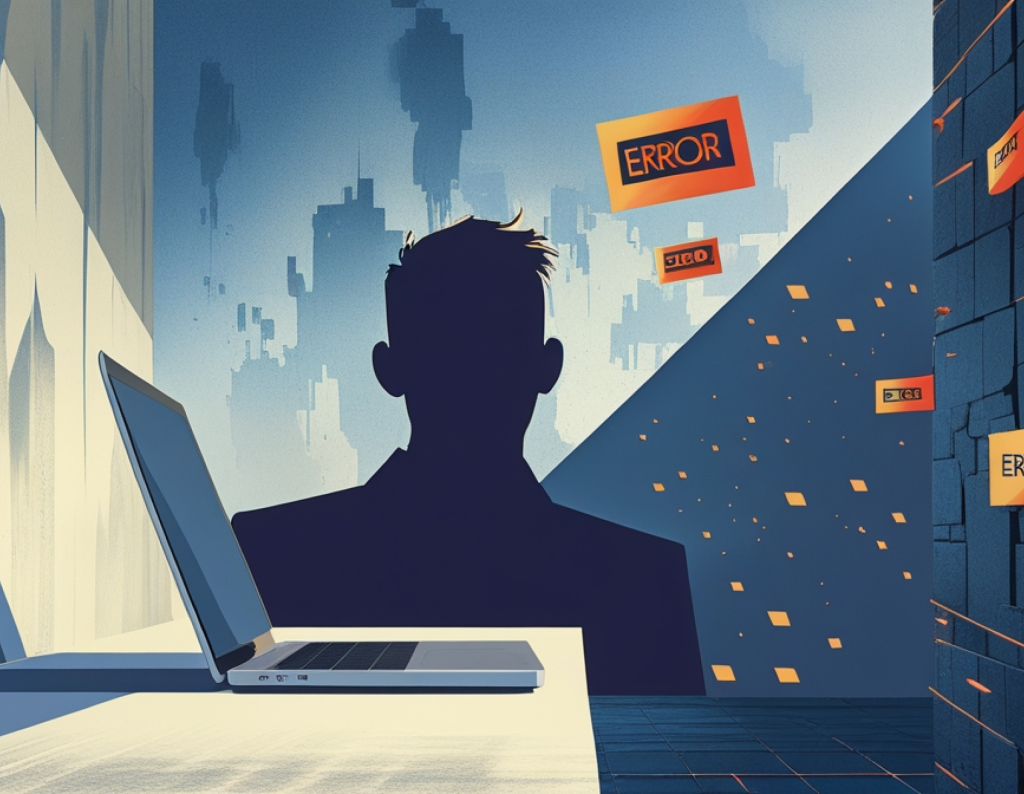
As a result, we lose a significant portion of our automatic feedback — both negative and positive. With no such feedback, the people we interact with on social media often don’t feel real or close to us. Anonymity dissolves social frameworks and constraints: you are anonymous, and so is your opponent.
This leads to the second point. It’s hard to feel closeness, support, or empathy toward anonymous people. You could say that alongside anonymization comes dehumanization. Behind a text and an avatar, you no longer see a person. So people start allowing themselves sharper, harsher statements. They see nothing wrong with provocation or aggression. You don’t feel too bad about cursing at the chair leg you just stubbed your toe on.
Third, the disinhibition effect kicks in — a lack of sufficient cognitive control over one’s actions, meaning a failure of inhibitory control. People respond to messages online almost instantaneously.
When someone interacts offline, they receive a wealth of nonverbal information about the other person — enough to read the situation accurately, to notice when the other person is getting angry, hurt, or tense. Online, you typically get plain text, a very thin slice of context, and you react to that alone — instantly. There’s no additional layer of information, no time to process and, say, hold back a sharp remark.
Simply put, most emotional reactions skip analysis entirely and send a direct signal to the fingers: write the reply, no filter.
Online arguments have exposed the flaws in our thinking
2Digital: Why is it that some people online become almost unrecognizable — rude, angry, caustic — while others communicate exactly the same way they do in real life?
Uladzimir: The short answer is: because people are different. But let’s try to unpack that a little.
We know that online, just as in ordinary society, some people behave more aggressively and some behave less aggressively. Imagine a large all-hands meeting at a company where a manager says something unpleasant to the team. Most likely, a significant portion of people will simply stay silent; another significant portion will grumble quietly among themselves; and only a handful will speak up openly.
Well, anonymity online gave everyone who used to speak in a murmur the freedom to speak out loud. And suddenly we saw an enormous number of unhappy, aggressive, demanding people. They were always there — they just weren’t being heard.
On social media, there’s no difference between speaking aloud and speaking under your breath — information travels at the same volume. Social media gave a voice to those who previously had none, and we weren’t particularly thrilled about what we heard.
On the other hand, our reactions to online stimuli are evolutionarily far newer than the reflexes that formed much earlier. Any phenomenon we’re not well-adapted to evolutionarily — and social media falls squarely into that category — can expose the imperfections in our cognitive architecture.
2Digital: What kinds of imperfections are we talking about?
Uladzimir: For one, it’s become clearer that maintaining empathetic, considerate behavior toward other people still requires considerable effort.
In physical-world interactions, that effort is often obviously worth it — and most of the time we make it automatically. But why you’d need to make the same effort on social media is far less obvious, and people are far less inclined to bother. Not necessarily out of bad intent: our brain is constantly trying to optimize its thinking processes, conserve energy, and simplify.
It’s worth recalling the work of Daniel Kahneman. In his book Thinking, Fast and Slow, published in 2011, he describes two systems of thinking: a fast, intuitive one that’s more prone to errors, and a slow, more analytical and precise one. In 2002, Kahneman received the Nobel Prize in Economics for integrating psychological research into economic science, particularly in the area of judgment and decision-making under uncertainty.
Often, when a threat arrives, we act first — a quick decision is made — and only then do we start thinking. That made sense tens of thousands of years ago, when something rustled in the bushes and you had very little time to figure out whether it was a tiger or a rabbit. The ones who ran immediately were the ones who survived.
Today, in most situations, a fast reaction isn’t necessary — there’s no immediate danger. But we keep triggering that same mechanism, a kind of evolutionary atavism. And social media essentially recreates this situation: first you write something, and only then you start thinking.
2Digital: So is the responsibility for rage bait entirely on the person writing the posts?
Uladzimir: Not entirely. It’s worth remembering that social media is designed to pull you as deeply as possible into discussions around hot-button topics. Once an algorithm spots your reaction to one charged post, it will try to show you several more like it — essentially provoking you into further engagement. There isn’t necessarily any malicious intent behind this — it’s ordinary marketing.
What can happen is that a person ends up reacting to post after post in a kind of semi-automatic mode, with no time left to stop and ask: what am I actually doing right now, and why?
A catalyst for mental health problems?
2Digital: Now that governments in more and more countries are pushing to regulate the internet, we often hear the argument that the state is seizing an unsanctioned grip on a regulatory mechanism — that the internet, once a frontier of free thought, is turning into one big police state.
Uladzimir: I wouldn’t look at it that quite so grimly. I think the internet is becoming part of social life and is starting to fall under its rules. That’s what happens with every mass phenomenon. Think about how much freedom drivers had in the early days of the automobile, or aviators, or newspaper and magazine publishers — and so on.
2Digital: Have you encountered cases in your practice where social media became a catalyst or a complicating factor in someone’s mental health problems?
Uladzimir: Yes, I have. This requires a separate discussion for different mental health conditions.
Some disorders are more heavily dependent on environmental and/or psychological factors — eating disorders, for example, are often triggered in part by content consumed online. Or bullying, or “cancellation,” which can lead to quite severe psychological states: heightened anxiety, deepening depression, up to and including suicide.
In the onset and development of such disorders, social media interactions and the information flowing through them can genuinely become a significant contributing factor.
When it comes to more severe mental health conditions — such as bipolar disorder or schizophrenia — it’s unlikely that social media alone can cause these disorders. But it can bring an underlying problem to the surface, and even worsen the situation of someone who is already vulnerable.
2Digital: Does modern psychiatry account for this relatively young and under-researched phenomenon — the impact of social media on a person?
Uladzimir: As we’ve discussed, in some cases it is significant. If a patient mentions that their social media interactions are causing them distress, that is of course taken into account — because for many disorders, a key diagnostic criterion is dysfunction across several areas of life. The international classification of diseases lists these areas explicitly: work, home, social interaction. Social media is part of social interaction.
2Digital: There’s a hypothesis that aggressive behavior on social media is a form of psychological release — a way to safely vent anger, anxiety, and frustration. How valid is that idea?
Uladzimir: I’d guess it stems from an idea that was fairly popular in psychology a couple of decades ago — the notion that if you have a negative emotion, you shouldn’t suppress it; the best thing to do is act it out. At a flash of rage, for instance, punch a pillow, smash a plate, or go into the woods and scream. But research shows that this doesn’t actually work.
If anyone thinks social media is their lightning rod — their way of relieving pressure from real life — I have bad news. What tends to happen in practice is that negative behavior online becomes increasingly appealing. A closed loop of negative emotion generation takes hold; the mechanism for constructively working through a crisis gets forgotten. Self-reflection disappears, along with any real work on oneself. People simply get more and more fired up about everything, instead of stopping to ask: why am I doing this?
2Digital: Why do people in comment threads and arguments move so quickly from disagreement to personal insults? What triggers the rapid escalation mechanism on social media?
Uladzimir: Do you remember Godwin’s Law? It states: “As an online discussion grows longer, the probability of a comparison involving Nazism or Hitler approaches one.”
A rule invented as a joke very quickly proved its worth in internet arguments. In essence, it describes exactly this: social media accelerates the shift from the subject of a discussion to the people in it. Hitler doesn’t appear by accident — he represents, in the minds of most people, the greatest evil that exists. When battling an opponent online, people unconsciously generalize their adversary’s negative traits more and more broadly, and fairly quickly arrive at the image of some kind of universal evil.
The reason is a narrow context window. To argue on the internet, you don’t need to remember that behind the text is a real, living human being. On top of that, the ability to conduct a genuine debate is actually a fairly complex skill — and the internet handed that platform to everyone.
Unlike public debates, social media is primarily a space for entertainment, and arguments there don’t always aim to reach any common ground. They may have no goal at all.