Over the past year, the healthtech market has grown noticeably more demanding toward products tied to nutrition, disease prevention, and digital user support. According to Rock Health, American digital health startups raised $14.2 billion in 2025 — but the money is being distributed with growing inequality: the number of deals has declined while the average check has grown, as capital concentrated in the hands of fewer companies. Investors have become markedly more selective toward startups.
The market has been turned on its head. Once, people had ideas but lacked the resources and time to execute them. Now, with the arrival of the AI era and vibe coding, building a working prototype is far easier, and the time it takes to bring a product to life has dropped sharply. The challenge, then, is to find — among the flood of ideas — the ones whose creators understand where they’re going and how to get there.
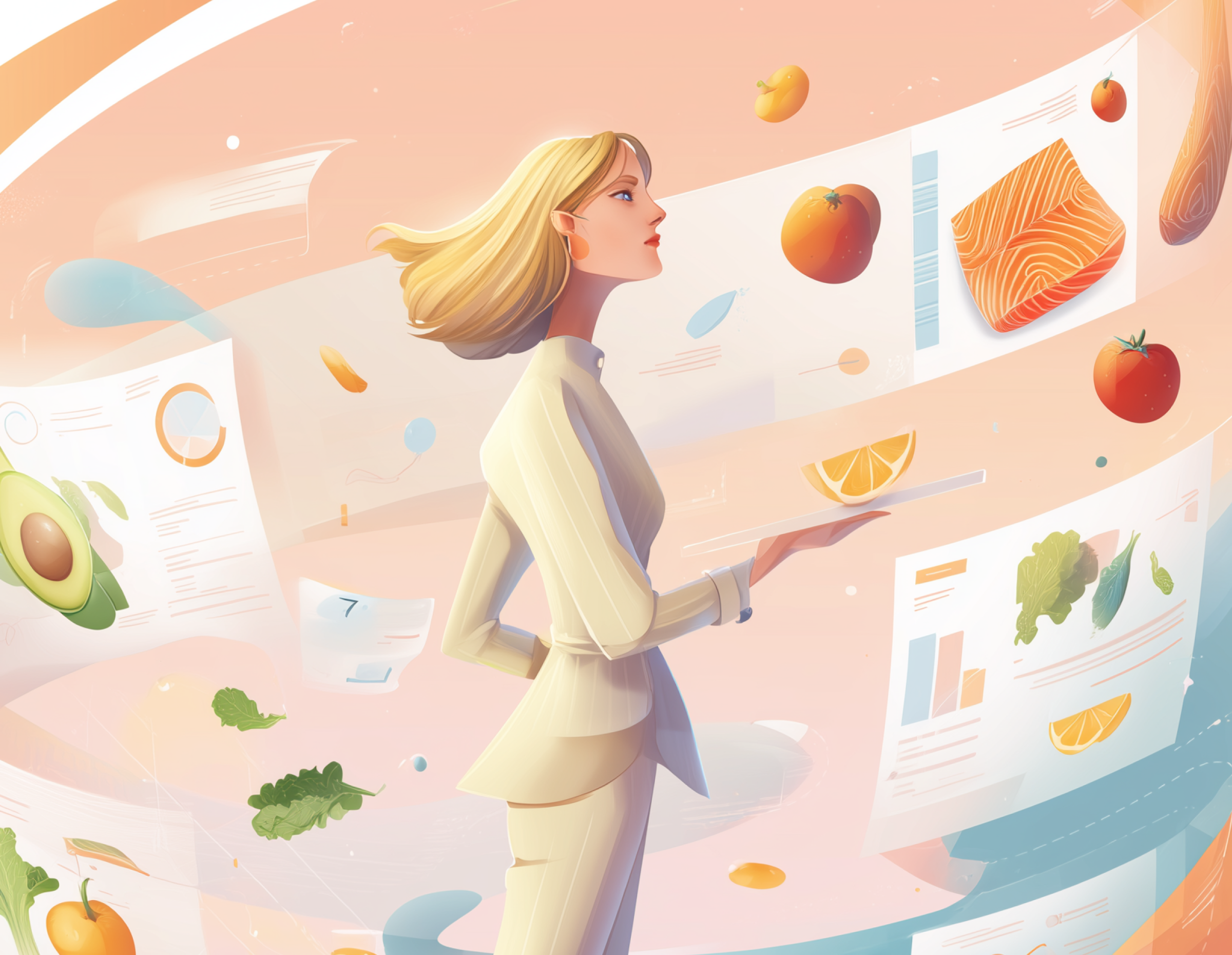
The food-as-medicine direction is becoming increasingly prominent on the professional agenda: Rock Health placed it among the fast-maturing trends at the end of 2024, and in January 2026, the Rockefeller Foundation launched a dedicated $10 million Food is Medicine Impact Fund — pointing to the sector’s core problem: there is no shortage of pilot projects; what’s scarce are those capable of growing into a sustainable business that someone will pay for.
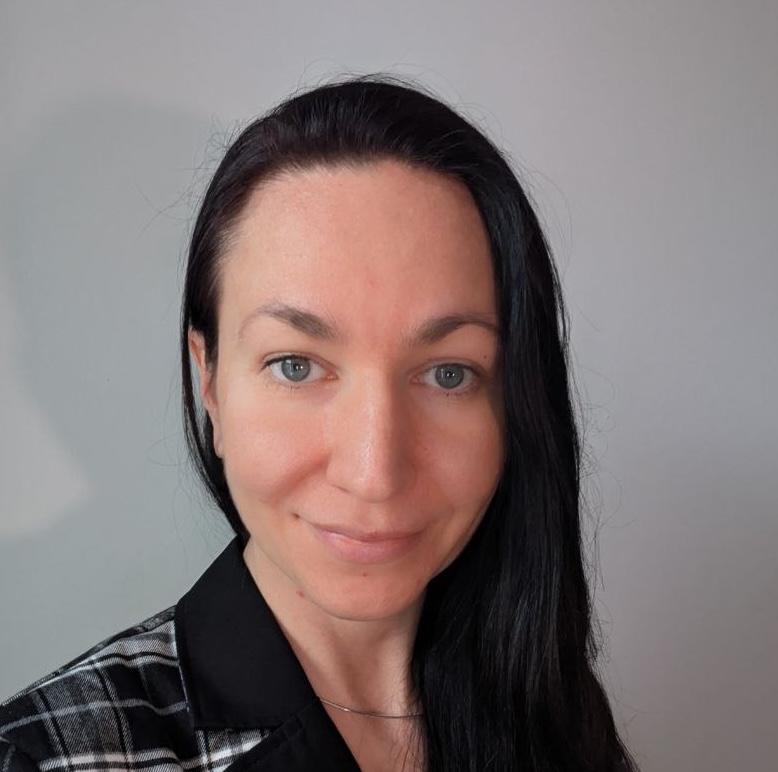
We spoke with Maria Kardakova — a biomedical engineer, nutritionist, and founder of iCook. It is a family nutrition app that tries to solve a very real problem: how to eat well in everyday life, where there is never enough time to cook from trendy diet plans or track down the ingredients they call for.
2Digital: Your project grew out of years of research and a PhD program. Could you take us briefly through your path?
Maria: I started as a biomedical engineer — studied physics, then worked on influenza virus and HIV. Somewhere along the way I realised I’m less interested in studying bugs in the lab and more drawn to public health; this field shows how small community changes may lead to incredible results — longevity for example. Even with activities like grocery store operations or reducing the sugar in childcare and school settings. It became the inspiration.
That’s how I moved towards nutrition, and later studied it at London Metropolitan University.
I worked in food tech on functional foods — reformulating ingredient lists so foods could actually do good for your body. In 2017 with a biotech company doing DNA and microbiome testing we developed a machine learning and computer vision tool that could identify ingredients on a plate as well as different types of fibre within fruits and vegetables.
In 2020 I started a PhD on big data in public health — genetics, microbiome, disease prediction models.
In addition to scientific work I was running a nutrition consultancy and saw that there was still something missing between science and dietary decisions people made day to day.
Clients would come with fancy genetic tests, microbiome results, blood panels — but all this boils down to a question of what they were going to make for dinner in a family where a child has a nut allergy and a husband — type 2 diabetes. Navigating such mundane life situations is still a massive hustle we rarely talk about.
Then 2020 happened, I was locked down and tried every recipe box on the market. By the third box I’d seen enough. Lack of variety, and I wasn’t going to pay three times over for pre-peeled carrots. So I started pulling together recipes from my years of consultancy work, collaborated with a photographer, and set up our own kitchen. What began as a simple meal plan randomiser built on British Nutrition Foundation guidelines has grown into a library of over 1,000 authentic recipes — lower sugar, higher fibre — with a full grocery delivery integration. That’s iCook.
2Digital: Most builders don’t have time for a PhD before launching a product. How do you survive in today’s environment without that scientific foundation?
Maria: If you want to build a scientific based project, but don’t have a PhD — get one on board. These are people with a very critical way of thinking. They’ll build models that will work for your startup for a very long time.
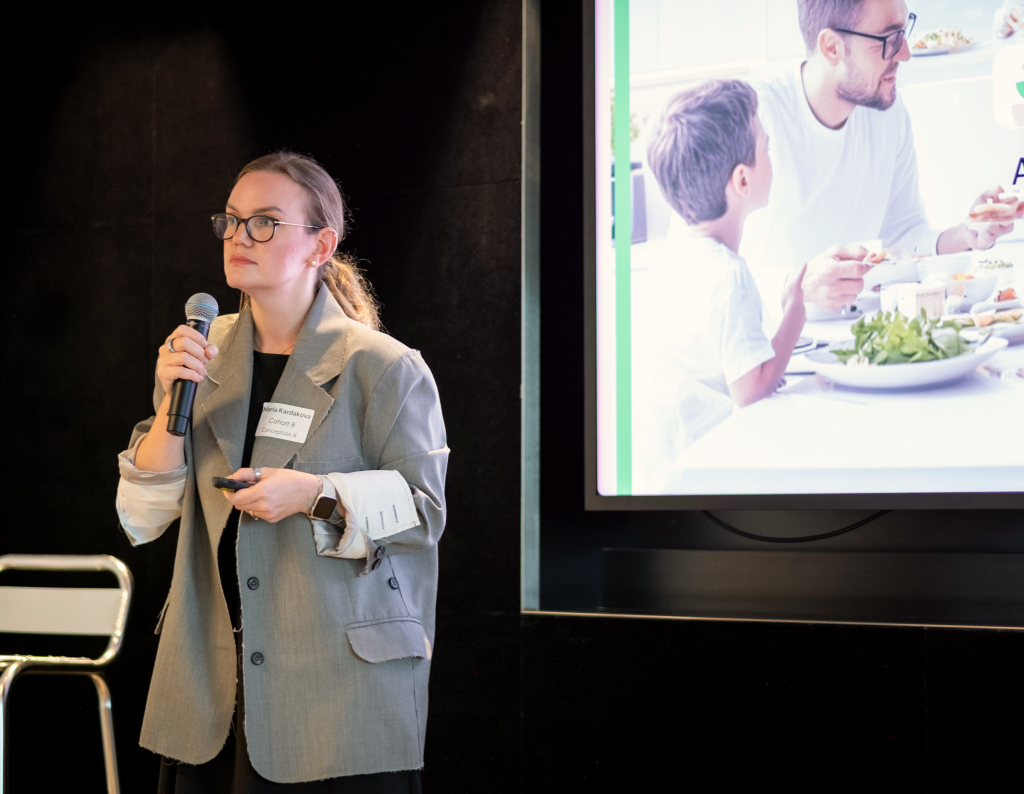
I happen to also give off the CEO vibe, but when I finished my PhD, my first move was joining Conception X, a UK programme that helps scientists convert into founders. We were trained in pitching, P&Ls, due diligence rooms, and speaking to investors. It built confidence. In my case statistical programming skills from my PhD let me prompt Claude well enough to build new app features myself which saves money on developers at this stage. Once investment is in place, I’ll happily hand that back to real developers.
But if you’re already a CEO with a brilliant idea, you don’t need to do all that yourself — go find someone with the degree and the willingness to adapt to a business environment. That will strengthen your proposition enormously, because competition among startups right now is crazy. And I don’t just mean a token SAB board member — I mean someone who uses LLMs at maybe 15 times the efficiency of the average user, who can multitask.
None of that covers the hundred other necessary things. What about media presence, community development — who your ambassadors are?
Right now we are building a network of healthcare professionals, nutritionists and dietitians — because we’re aiming for a B2B2C model where clinicians refer patients to iCook as their AI nutrition assistant. And validating that will use exactly the same clinical trial framework I built for biotech projects in the past. Same skills, different arena.
For now we are really scientific driven but still a multitasking startup, with a team of 12 to 15, including part-timers.
2Digital: So expertise can be bought. Then what about obtaining evidence? Randomized trials are gold standard, but they’re slow and expensive. Meanwhile real-world evidence or adaptive studies emerged. Are we redefining what evidence means, or do we still need years to understand what works and what doesn’t?
Maria: RCTs are still a must.
Real-world evidence will always be rated as epidemiological data, and yes, we want more of it, better stratified, with improved cohorts and stronger validity checks. Nutrition tracking alone has only just moved from questionnaires to AI-based image recognition, which means we’re finally getting closer to capturing what people actually eat day to day. That’s progress.
But when it comes to clinical claims — say, proving that a specific probiotic bacteria improves immune function because we noticed a signal in a microbiome dataset of thousands of samples — you still have to prove it in a controlled environment. There is simply no pathway to creating a drug or a medical tool on epidemiological signals alone. Correlation doesn’t mean causation, and no regulatory body will let you forget that.
So the two tracks aren’t competing — they’re sequential. Real-world data tells you where to look. The RCT tells you whether you actually found something.
2Digital: User downloads spiked in 2020–2021, dipped post-pandemic, and are now recovering. Is it market correction, user exhaustion, or something else?
Maria: I’d call it a lockdown hangover. People spent so much time glued to wellness apps during 2021 and 2022 that by the time restrictions were lifted, they wanted the opposite — gyms, travel, outdoors. There was a spike, then the burnout.
What we’re seeing now is the pendulum swinging back. People are becoming obsessed again with measuring and optimising their health, tracking longevity metrics, and uploading their data to LLMs. Sustainability is a growing thread in that too.
2Digital: There are about 337,000 health apps on the market. How can a developer be heard by investors in this crowded space?
Maria: I will speak from our own experience here. I pitch regularly in front of a room of male judges who’ve never thought about meal planning. I’ve literally been told — “recipes? Nobody uses recipes anymore, everyone buys ready meals.” Well, go ask your mum. Go ask your wife. Women are in charge of household meal planning in over 80% of cases. If you look at the App Store and Google Play, meal planners and recipe apps are still among the top searches. But the irony is that you can not rely on data only.
The data is there — it’s just that the people holding the cheques don’t always feel personally connected to the problem. The story has to be relatable to whoever is making the financial decisions.
If you look at male-dominated fields like gaming, or even the sex toys industry — those are going very advanced. I personally play a lot of video games and see how advanced those technologies already are. But it’s striking how the kitchen hasn’t been upgraded since the 1970s, when fridges and microwaves were introduced. And it’s still just that. Maybe an InSinkErator (garbage disposal — Ed.) was added — so we should be happy, I guess.
2Digital: Retention is another headache. The statistics are ruthless — single-digit numbers for most apps. Does that mean the app wasn’t solving a real problem to begin with, or is there something else going on?
Maria: Usually it’s a lack of the right audience from day one, and not enough early engagement to build momentum. We got lucky in 2021 — the MVP trial landed with an audience that genuinely needed what we were building. By 2023, when our first investment came in, we already had a 10% paid subscription rate on a freemium model, which is a strong signal. We spent roughly 90% of that first round on marketing and engagement because we knew the product could hold people — we just needed to get the right people in.
The idea behind iCook is to be another Duolingo, but for your eating habits. Something deceptively simple, but genuinely sticky. When you cook two new meals a week and they actually taste good and they’re healthy — you feel like a superhuman. You want to replicate that. Food hits the brain’s reward system in a way that’s very hard to fake, and that makes it one of the most powerful engagement tools available in the app world.
It also makes it cheap to market. Before iCook I worked at a biotech company — we had to hire scientists as social media ambassadors just to explain what the product did. The cost was enormous. With food, you just show it. The visual pull does the work. That’s a big part of why we reached break-even last year, just one year after our first investment. Now we’re raising for the B2B2C model because the MVP is proven and users are sticking.
2Digital: It sounds like solving a problem is not enough — you have to build the whole infrastructure around your product, embed it into people’s lives, and sell it on multiple levels simultaneously.
Maria: Any accelerator will hit you with those three questions on day one: how will you get users? How will you make them stay? How will you make money from them? Not just retain them — what value are you creating? Because today any LLM can generate a hundred startup ideas in any industry in minutes. The differentiator is execution, and execution starts with truly knowing your user’s pain.
The best founders I meet are seasoned consultants — people with ten or fifteen years of direct client work. They know the problem intimately, from thousands of angles. They just need to learn how to frame it for funders.
And that framing part is relentless. I’ve been raising for three or four months now — we have 600K of our million-pound round soft-committed, from angels and funds. But it’s everyday communication, everyday selling. What I’ve learned is that your best investors are the ones who have personally experienced the problem you’re solving. If someone has never cooked in their life and you say the word “recipes,” you’ve already lost them — no matter how strong your numbers are, no matter that you’re break-even, no matter the App Store data. They simply don’t feel it. So in the end, it still comes down to deep networking and finding the people who believe in what you’re building.
2Digital: “Personalization” is probably the most overused word in healthtech right now. But how far can it actually go in practice? Take two healthy women, both 40, no specific conditions or allergies — how different does their diet really need to be? Do they need additional testing?
Maria: More different than you’d think and you don’t necessarily need a blood panel to get there.
Before I even look at biomarkers, I’d want to know: are their periods regular? What’s their medication history? What’s their relationship with food — how many years have they spent dieting? That will affect metabolic rate and predisposition to eating disorders. Then ethnicity, childhood eating habits, body image.
What looks like a perfectly healthy 40-year-old from a conventional clinical checklist might be someone whose daily meals are completely unbalanced in ways a GP would never catch.
And timing matters enormously here — because both of these women are approaching perimenopause, which is when things go very wild, especially for those who aren’t prepared. For example a woman who’s had stable weight her whole life, never been pregnant, suddenly hits 45 or 50 and experiences dramatic hormonal shifts. Will your GP remind you that if you are over 45, you need to eat more protein and probably do weightlifting? That’s nutritionist territory.
With age, gender, a few questions about dieting history and current food relationships, I can already build a genuinely personalised meal plan. The bar for meaningful personalization is much lower than the industry makes it sound — and that’s actually good news for reaching general populations, not just biohackers in Silicon Valley.
2Digital: That doesn’t sound much like science. People are notoriously bad at self-reporting anything. They’re terrible at eyeballing portion sizes, recollecting symptoms. How can we be sure we’re not just measuring the placebo effect?
Maria: Placebo works in 30% of cases. That’s actually not bad.
Just the act of tracking changes behaviour. Once people start logging what they eat, calorie consumption in those who were overeating drops by around 15% — without any other intervention. Some habits naturally pull you toward healthier ones. That’s not placebo, that’s friction reduction.
I’m also not arguing we need to sequence everyone’s microbiome to give personalized recommendations. We already have enough epidemiological data to give meaningful feedback on habits — and for the average person without significant health conditions, habits are where almost all the gains are. The idea that personalisation requires mountains of biometric data is a misconception in this space.
Where precision data does matter — neuroactivity, stroke recovery, Alzheimer’s — we’re back to RCTs and clinical-grade measurements. That’s a medical tool, and it should be held to that standard. But for the rest of us? We know enough. We just need to use it.