


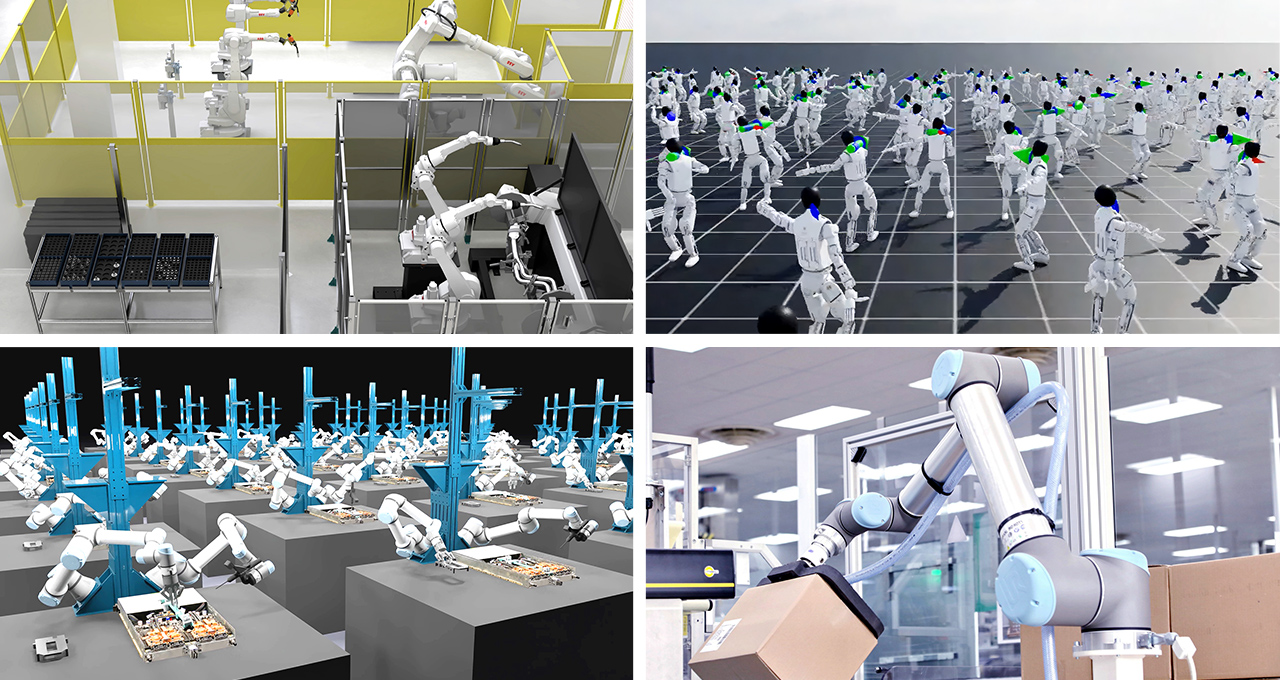
Nvidia has unveiled a new initiative focused on “Physical AI,” aiming to bring artificial intelligence out of purely digital environments and into the physical world of robotics. The company is teaming up with a range of global robotics and automation players to accelerate the development and deployment of intelligent machines capable of operating in real-world conditions.
At the heart of the approach is Nvidia’s Omniverse platform, which uses advanced simulation technology to train robots in virtual environments. This allows developers to generate massive amounts of training data without relying on expensive and time-consuming real-world testing. These simulations can replicate physics, environmental conditions and interactions with objects in a highly realistic way.
Nvidia is also developing AI models specifically designed to control robots – systems that can interpret their surroundings, make decisions and execute tasks in real time. The goal is to enable robots to handle more complex operations, such as object manipulation, navigating dynamic environments and working alongside humans.
As part of the announcement, Nvidia said a wide range of partners from the robotics and industrial automation sectors are joining the ecosystem. The collaboration includes both hardware manufacturers and companies building software for robotics. The idea is to create a shared technological foundation that helps move the entire robotics industry forward faster.
One of the biggest challenges in robotics is the so-called “sim-to-real” gap – getting models trained in simulation to work reliably in the real world. Nvidia says its platform is designed to narrow that gap by improving the realism of simulations and using generative AI to create a wide range of training scenarios.
The move signals that Nvidia is going all-in on AI beyond software. The company is positioning itself to play a bigger role in robotics and in systems that operate in the physical world – not just inside data centers.