


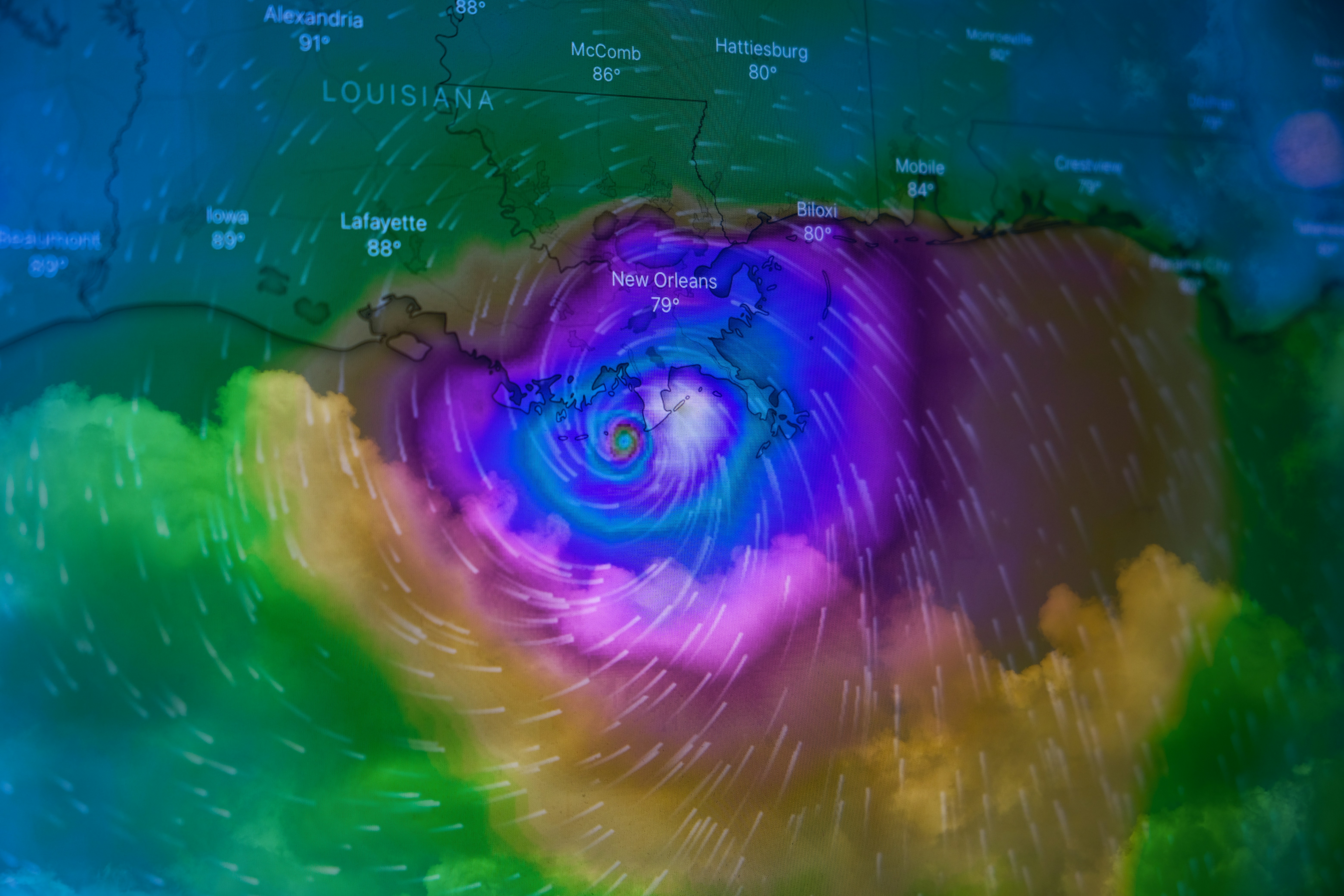
The platform was unveiled at the annual meeting of the American Meteorological Society in Houston and is described as the world’s first fully open, accelerated AI software stack for atmospheric and climate prediction. According to Nvidia, Earth-2 includes three new models: Earth-2 Medium Range, Earth-2 Nowcasting, and Earth-2 Global Data Assimilation. Together, they enable global weather forecasts up to 15 days ahead, short-term prediction of extreme weather events up to six hours in advance, and rapid assimilation of atmospheric data from satellite and ground-based observations.
What distinguishes the Earth-2 family is that it provides weather and climate forecasting capabilities as open resources rather than closed, hard-to-access algorithms. This allows scientists, startups, meteorological institutions, government agencies, and energy companies to run, adapt, and train the models on their own computing infrastructure, without relying on expensive supercomputing systems.
Nvidia emphasizes that this approach can significantly speed up computation and reduce the cost of forecasting compared with traditional physics-based methods, which require massive computing power. Earth-2 also integrates earlier open models and tools for building data pipelines and inference workflows, making it easier to deploy complete end-to-end forecasting environments.
The open nature of Earth-2 further enables local customization of forecasts for specific geographic conditions or sectoral needs — from storm and heavy rainfall warnings to regional climate change analysis. This represents an important step toward democratizing access to advanced weather and climate modeling tools, potentially expanding their use in countries and organizations with more limited computing resources.