
Over two decades, the IT sector has evolved from a standalone services market into one of the key drivers of macroeconomic stability. It’s still often described as a volatile and contradictory space — dotcoms, bubbles, AI hype, promises the market doesn’t always have time to put to the test. But something else has been unfolding in parallel. The digital industry is turning into a source of innovation, foreign currency earnings, high-skilled employment, tax revenue, services exports, and the technological modernization of other sectors.
According to OECD data, the ICT sector in OECD countries grew roughly three times faster than the broader economy between 2013 and 2023, posting average growth of 7.6% in 2023. The World Bank’s Digital Progress and Trends Report 2025 notes that value added in the IT services sector grew at 8% per year between 2000 and 2022 — nearly twice the pace of the global economy — while IT services employment grew at 7% per year, roughly six times faster than overall employment.
There’s another indicator that helps explain why IT is not just as an industry, but a shock absorber. The World Bank points out that ICT services exports kept steadily climbing, rising 22% between 2022 and 2024. UNCTAD, in its analysis of digital trade, highlights that European economies accounted for 57% of global ICT services exports in 2024.
So when does IT stop being just a strong sector on its own and start making the entire economy more resilient? Not only through exports, but through the digitalization of industry, healthcare, education, agriculture, and public administration. A country may sell software on foreign markets, but if its institutions are weak, its education system is struggling, and other sectors aren’t picking up the technological spillover, IT risks becoming an export island. Attractive, lucrative, but isolated… and ultimately short-lived.
This is what we explored with Alexander Malyarenko, economist and business analyst at Andersen, who has spent more than 15 years studying the macroeconomics of Eastern Europe and the EU and tracking the impact of digital technologies on economies around the world.
2Digital: In your view, at what point does the IT sector become a factor of macroeconomic stability for a country?
Alexander: There’s no precise moment you could point to as a clear turning point. I’d put it differently: what we’re seeing now is well documented in research from the World Bank, OECD, UNCTAD, the European Bank for Reconstruction and Development, and other organizations.
They’re no longer looking solely at how the IT sector itself is developing — they’re examining how the digital industry is shaping the macroeconomy of a country, a region, and sometimes the world at large.
For instance, the OECD reports that the ICT sector in OECD countries grew roughly three times faster than the broader economy over the past decade. The World Bank shows that IT services outpaced both the global economy and overall labor market growth. This is a sector that touches exports, employment, tax revenues, foreign currency earnings, the quality of public services — and crucially, the ability of other industries to weather shocks.
When does a mature IT sector become a stabilizer? When it helps the economy not just grow, but push through crises — energy crises, armed conflicts, supply chain disruptions, financial shocks. Commodity exports can take a hit from price swings, transport bottlenecks, or war. Manufacturing can run into component shortages. But digital services, when they’re competitive, are far easier to redirect to a new market if trouble flares up at home or in one of the existing export destinations.
IT becomes a factor of stability when it’s tied not only to outsourcing, but to domestic digitalization, education, R&D, the labor market, and public services. That’s when it starts functioning as a systemic pillar of the economy.
2Digital: How well does ICT’s share of GDP reflect the strength of the IT sector?
Alexander: The ICT share of GDP is a useful indicator, but it doesn’t tell the whole story. You can look at IT’s share of GDP and see that the sector is growing — and that matters. But if we want to understand IT’s real strength, we need to zoom out.
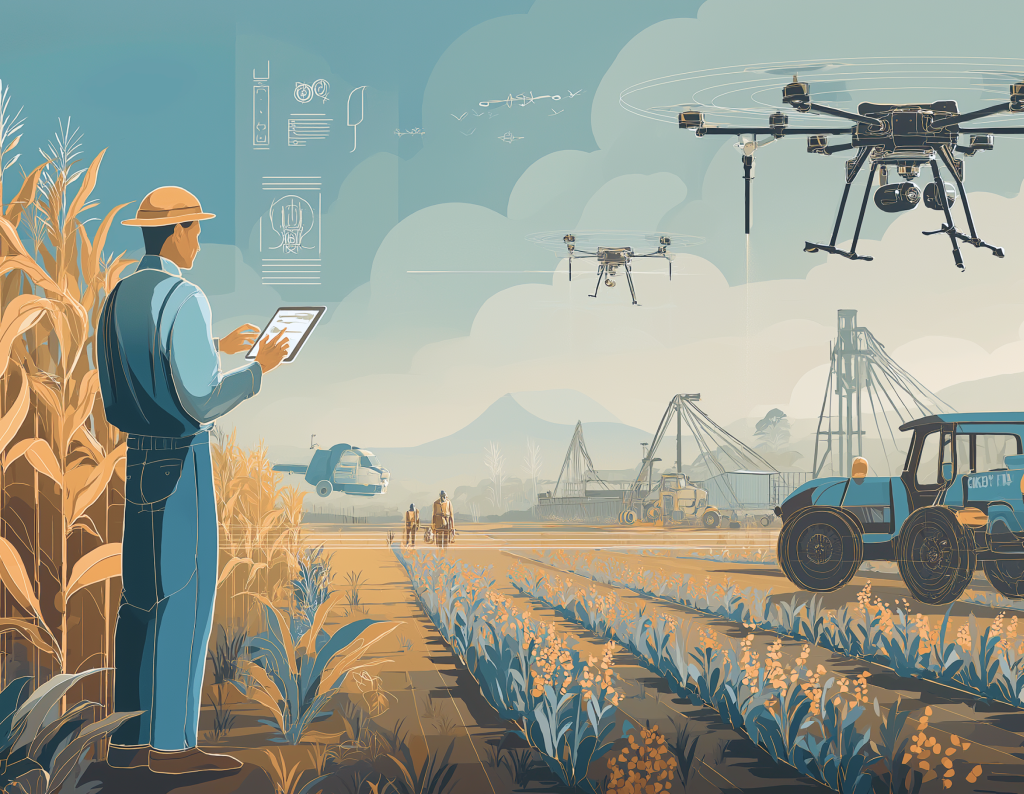
A strong IT sector has deep, working connections with industry, healthcare, education, agriculture, finance, logistics, and public administration — with the economy in its full breadth. To put it plainly, IT isn’t going to grow carrots, but with IT, even agriculture can become more productive: precision farming, drones, sensors, yield forecasting, logistics automation.
The percentage of IT in GDP might stay roughly the same, because other sectors are growing too. But they’re growing partly because of IT. So looking only at ICT’s share of GDP is like judging an engine by the size of the car’s hood.
At a minimum, I’d look at: ICT’s share of GDP, IT services exports, sector employment, wages, tax contribution, R&D share, IT’s interconnection with other industries, and the digitalization level of public administration. If IT is working exclusively for foreign clients and barely transforming the domestic economy, it isn’t even close to showing its full potential.
2Digital: Can we talk about a trickle-down effect here — where digital services spread outward from the core of the economy into other spheres?
Alexander: There is such an effect, but in IT it plays out far faster than in older technological cycles. A hundred years ago, if a steam engine was developed and built in England, it might take a very long time before one could be built anywhere else in the world. Today, a new technology emerges in Silicon Valley — and by tomorrow, it can already be adopted and built upon in another country.
Of course, it all depends on how ready an economy is to absorb innovation. But when we’re talking about IT services, a new AI model — whether that’s ChatGPT or Claude — drops a new capability, and by tomorrow, sometimes by today, it’s already being used somewhere else in the world.
From an innovation diffusion standpoint, the effect in IT is nearly instantaneous. But the economy’s stabilizing mechanism works a little differently — and that’s a separate conversation.
2Digital: So what does that mechanism look like?
Alexander: For an economy, IT matters as a source of exports, foreign currency earnings, tax revenue, and high-skilled employment. Once you have a cluster with a developed IT sector, you can keep pumping oil, manufacturing cars, selling industrial equipment, and growing your agricultural base — all at the same time. But IT adds yet another layer of resilience on top of all that.
Imagine that at some point car sales slump. Or the oil market goes haywire. Or trade routes close down. IT services can partially absorb those kinds of shocks. They’ll be in demand today and tomorrow — the specific products and markets may shift, but the demand doesn’t dry up.
This sector is remarkably adaptable. If one company shuts down, another can spring up right next to it. Specialists move between projects and markets. Today they’re working for a client in Germany, tomorrow for one in the US — without leaving their apartment or relocating to a different country. That helps balance the economy when traditional industries run into trouble.
Right now, for instance, we’re seeing crises ripple through energy, logistics, specific regions, familiar supply routes, fertilizers, oil and gas — and these can hit physical trade hard and fast. IT services, on the other hand, can be pivoted to a new market much more quickly. You can’t reroute oil and gas to a different market in two clicks. With IT services, you can.
2Digital: Why does IT services export matter for a country’s currency stability?
Alexander: Because it acts as a currency shock absorber. During periods of crisis, digital services exports can partially offset weakness in manufacturing, logistics, and goods exports.
For IT companies, this strengthens their negotiating position with both the government and investors. For business analysts, it’s a solid argument for why IT projects should be evaluated not just as domestic products, but as exportable business solutions.
You’re not locked into a single market. You can build a product that sells poorly on your local market — say, because purchasing power has taken a hit — but that doesn’t mean it won’t sell somewhere else. In IT, everyone is working with more or less the same computers, phones, browsers, and cloud infrastructure. Internet quality varies, digital services vary in maturity — but the value of good software can be global.
If you’re operating only on the domestic market, you’re exposed to local currency swings, local demand cycles, and local crises. If you’re working for the global market, you’re bringing in revenue in multiple — and usually freely convertible — currencies. That helps cushion domestic currency shocks.
2Digital: Can the IT sector partially offset a drop in industrial exports or trade?
Alexander: Yes, partially it can. But compensation shouldn’t be confused with full substitution. You can’t build an economy that’s made up of software engineers a hundred percent of the way. That’s its own dangerous illusion.
IT can fill part of the gap through export services growth, increased tax revenues, absorbing additional employment, and sustaining domestic purchasing power. But it works even more powerfully when it helps other sectors become more efficient. If you have not just outsourcing, but also R&D, product companies, data analytics, and AI capabilities, you can start lifting healthcare, manufacturing, agriculture, and education — the full breadth of the economy.
Take healthcare, for example. It used to be weak from an operational standpoint. Then digital solutions get rolled out: online scheduling, diagnostics, analytics, patient routing, telemedicine. Doctors are still doctors, but the system runs better. At some point, people start coming to you for treatment not only because you have good physicians, but because IT helps make the whole experience more convenient and efficient.
2Digital: What indicators best show that the digital sector is genuinely supporting the economy during a crisis?
Alexander: I wouldn’t look at a single indicator — I’d look at a cluster of them.
First — the ICT share of GDP and how it trends over 10–15 years. If the sector keeps growing through several consecutive crises, that’s a signal.
Second — IT services exports. If they hold steady or keep climbing while goods exports are sagging, that’s already a macroeconomic effect.
Third — employment and wages. If highly skilled specialists stay employed and keep earning, that sustains domestic demand and the tax base.
Fourth — IT’s interconnection with other sectors. The main effect here isn’t having a strong IT sector in and of itself. The main effect is the digitalization of other industries.
Fifth — the digitalization of public administration. Bureaucracy lends itself very well to digitalization. If the government can roll out digital processes quickly, it brings down transaction costs for businesses and citizens alike. This is especially visible in smaller countries (https://e-estonia.com/), where it’s easier to overhaul the system faster.
2Digital: What role does IT play in keeping highly skilled specialists employed during crises?
Alexander: There are two levels to this.
The first is the upside. If a country has a competitive IT sector, employment within it can stay stable even during a domestic crisis — because specialists are working for the global market. You can see this playing out in Belarus, the Baltic states, Poland, and Ukraine. The local economy can be going through serious shocks, while the IT team keeps delivering on projects for clients in another country.
The second level is more complex. For IT to remain resilient, a country needs to keep producing talent. Paying high salaries and pulling in professionals from outside isn’t enough on its own. Tomorrow, a neighboring country can offer more — and specialists will move there, physically or legally. That’s why you need an education system: universities, an engineering culture, strong mathematics schools.
But here a second-order problem kicks in. In the US and Silicon Valley, it’s already becoming clear that very high salaries in the commercial sector are draining people out of universities. Professors, lab directors, people who could be publishing open research and training students — they’re moving into private companies. The result is a growing body of proprietary development and patents, but a potential decline in the volume of open knowledge.
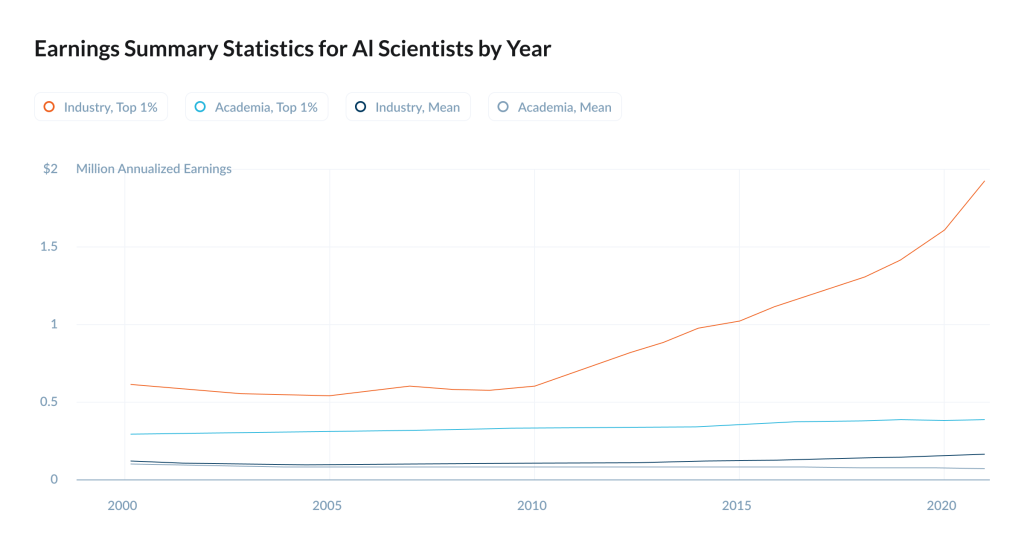
That’s a paradox in itself: when things are going too well, that can also turn problematic. Money can hollow out the very system that produces the talent in the first place.
2Digital: Why were Poland, Lithuania, Estonia, and Romania — long considered “catch-up” economies — able to make IT such a visible part of their economies so quickly?
Alexander: The main answer is adaptability. Many of these economies were catch-up development economies. They weren’t the wealthiest or the most advanced, but they managed to restructure their processes quickly and plug into larger economic systems.
Estonia started developing digitally at the state level earlier than most. It’s a small country, and the decision was made to digitize almost everything. That paid off, because public services, digital identity, business processes, and digital infrastructure became part of the national model.
Lithuania and Poland integrated well into the European Union. They saw the advantages of an open economy, joining international supply chains, working with multinational companies, and gaining market access. They had younger, more adaptable populations, a strong drive to catch up, a large base of small and medium-sized businesses, and less state interference.
Romania brought a strong engineering tradition, competitive salaries, a well-developed outsourcing industry, steady growth in product companies, and solid integration into the European market.
Then another factor came into play — the migration of specialists from Belarus, Ukraine, and Russia. Poland, Serbia, Georgia, Kazakhstan, Lithuania, Estonia, and other countries managed to partially absorb these people and create conditions that worked for them. That gave an additional boost.
2Digital: The Ukrainian IT sector managed to keep working through a full-scale war. How did that happen?
Alexander: Ukraine demonstrated something very important: digital services can operate literally under bombs. You don’t always need factory floors, physical routes, and conventional infrastructure. What you need is people, electricity, connectivity, laptops, and backup channels. There’s Starlink, generators, distributed teams, cloud infrastructure — and the work goes on.
Of course, that doesn’t mean war “doesn’t get in the way.” It gets in the way catastrophically. But IT turned out to be more mobile than many other sectors. Ukraine also had strong human capital, an engineering foundation, mathematics schools, an industrial culture, outsourcing experience, and entrepreneurs ready to adapt fast.
External assessments back this up. The WTO, in its review of Ukraine, writes that the country’s economy weathered two major shocks — COVID-19 and the full-scale war — and that after real GDP contracted by 29% in 2022, growth bounced back to 5.3% in 2023. The OECD, in its report on digital business transformation in Ukraine, separately examines digitalization as a factor in corporate resilience during wartime.
2Digital: What are the weak points of a model where IT is heavily dependent on services exports?
Alexander: The main problem is the “export island” effect. That’s when one part of the economy is living in the 21st century while everything around it is still stuck in the 19th. IT companies work for foreign clients, bring in foreign currency, pay good salaries — but are barely connected to the domestic economy.
In that case, the stabilizing effect is weaker. IT doesn’t transform healthcare, industry, education, public administration, or small business. It just does outsourcing. This can even produce a negative effect: IT professionals live in one reality, everyone else lives in another. If the broader economy is in poor shape, living in that country becomes uncomfortable even for the IT crowd. Sooner or later, they start leaving.
That’s why IT needs to be integrated into the broader economy quickly and effectively — not isolated, but connected to other sectors.
2Digital: Where does the American IT market stand right now in relation to the European one?
Alexander: I’d look at three centers of gravity at once: the US, Europe, and Asia — primarily China.
The American market is the strongest, driven by competition, capital, universities, scale, openness, and a concentration of talent. Enormous amounts of money flow through it. It’s easier to scale a product quickly there: one large market, one language, fewer internal legal and administrative friction points between states than Europe has between countries.
Europe’s strengths lie in regulation, institutions, data protection, and its industrial base. But it is heavily over-regulated. The ties between universities and business are weaker than in the US, which means the startup ecosystem has less room to run. Europe has many countries, many rules, many approval layers. Heavy bureaucracy means innovations are harder and more expensive to roll out. You’ve adapted a product for one market — and right next door is another market with a different regulatory context. In the US, adapting IT products and projects is far more straightforward.
China and Asia are the third center of gravity. They already have strong academic institutions, a massive market, and a readiness to scale solutions fast — and often to undercut on price. When it comes to LLMs, for instance, Chinese models can be significantly cheaper per token. For many developing countries in Africa or Asia, that will be the decisive factor. They’ll be looking at price, not ideology or politics.
The weakness of the American model is the risk of bubbles — and of resource overabundance. When the market is very large and there’s too much money sloshing around, you can pour funding into even a dubious idea. That accelerates innovation, but it can also create overheating. We already saw the dotcoms. Right now, the AI sector is facing a similar question from the market.
2Digital: Can IT itself create new risks for the economy?
Alexander: Yes. IT can not only strengthen an economy — it can also pull resources away from it. Take human capital. If the best professors and researchers leave universities for private companies, open science and education suffer. In the long run, that’s a risk of decline for the academic schools that laid the very foundation of the IT sector.
A second example: infrastructure. Money flows into data centers, chips, GPUs, and energy capacity. That may be rational for companies, since returns are higher right now. But resources are being drawn away from other areas where they could arguably deliver greater social or environmental benefit. You could build a factory, invest in industrial innovation, upgrade the energy grid. Instead, capital goes where yield expectations are highest in the near term. The same applies to components. The AI sector is already absorbing enormous volumes of chips and GPUs. Other industries find it increasingly hard to compete for those resources.
So the question isn’t whether IT should grow. It should. The question is one of balance. IT works well as a force that strengthens other sectors. What’s harmful is when it only enriches one sphere in the present moment — at the cost of undermining the long-term potential of the economy and society as a whole.