


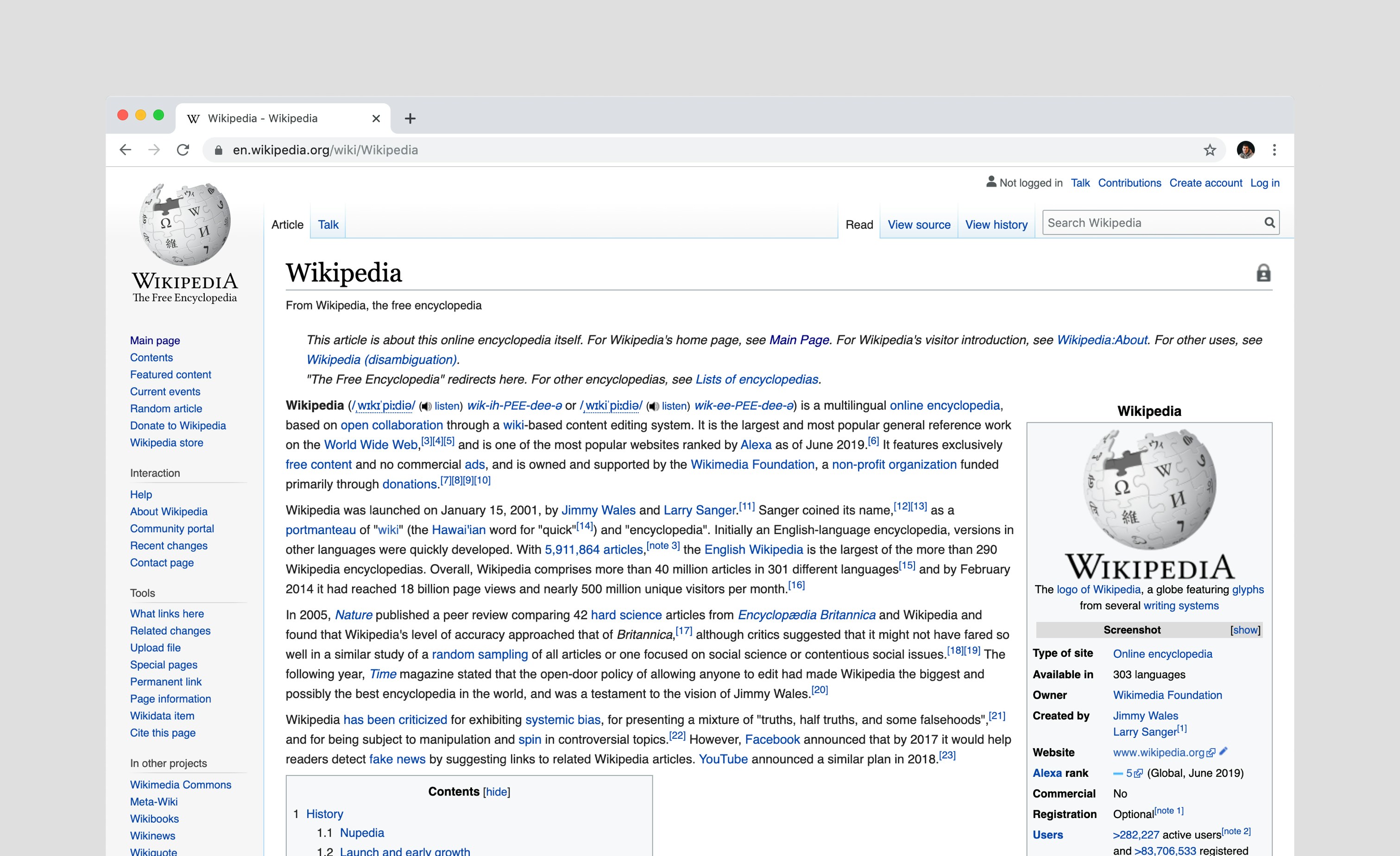
It’s no secret that the “knowledge” behind modern AI tools exists largely thanks to open and free sources like Wikipedia. The Wikimedia Foundation emphasized that the development of large language models (LLMs) would not have been possible without access to open knowledge bases. Data from Wikipedia has been a core component in the training datasets of systems such as ChatGPT, Claude, Gemini, and Copilot. At the same time, the organization points out that the intense use of its resources by bots and crawlers has significantly increased server loads — with up to 65% of Wikipedia’s web traffic now coming from AI-generated requests.
Wikimedia is urging AI developers to respect the same principles of openness that they themselves benefit from — by implementing mandatory attribution (clear source citations) and paid licenses that would help sustain projects like Wikipedia. As the Foundation noted in its statement, without reliable, human-curated sources of knowledge, artificial intelligence risks becoming a closed system, endlessly repeating its own errors and trapped in a feedback loop of misinformation.
The Foundation’s proposal reflects a growing global dispute between content creators and AI companies. Similar actions have already been taken by The New York Times, Reuters, and Axel Springer, which are demanding compensation from companies like OpenAI for using their editorial materials to train generative models.
However, the case of Wikipedia is fundamentally different — it’s not a profit-driven corporation, but a community of volunteers maintaining an open ecosystem of knowledge. Introducing a compensation model for Wikipedia’s data could therefore set a powerful precedent, forcing other tech companies to rethink how they use the sources that fuel their models.
If the Wikimedia Foundation succeeds in achieving even part of what it demands, it would mark an important step toward fair cooperation between content creators and the AI industry — which, for now, continues to rely on their work mostly without paying for it. One thing is certain: without access to Wikipedia, every chatbot would lose a huge part of its capabilities.