


Unlike traditional computers and smartphones that process information as bits (representing a 0 or 1), quantum machines rely on qubits. Thanks to subatomic physics, qubits can exist in both states simultaneously through a phenomenon known as superposition. In practice, this allows for the parallel analysis of millions of combinations, a capability that could eventually lead to rapid drug discovery, breaking advanced cryptography, or creating entirely new materials – tasks that would take today’s supercomputers thousands of years to complete.
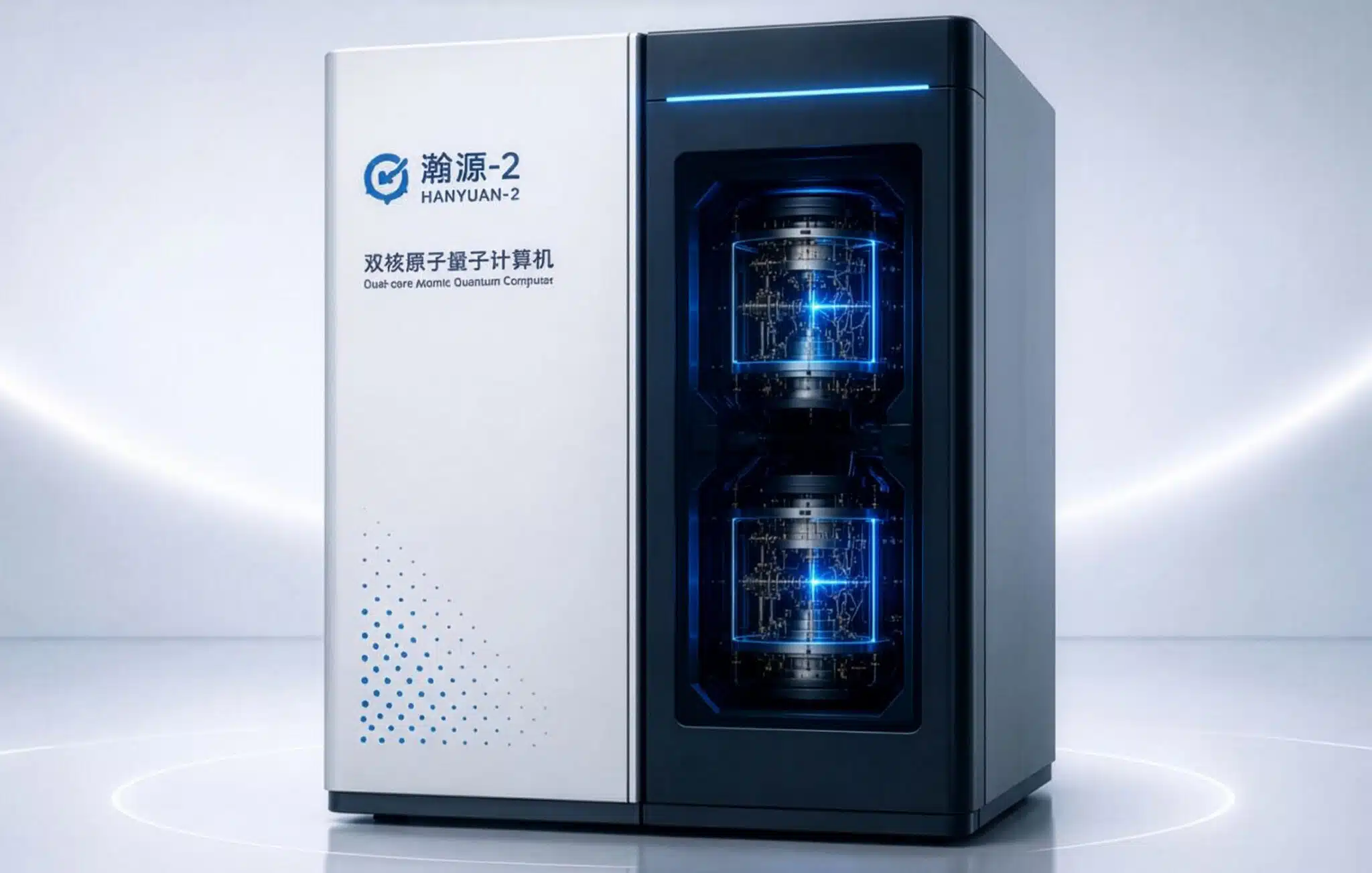
Building a stable quantum computer, however, is notoriously difficult, which is why the claims coming out of Wuhan have made waves across the tech world. Chinese engineers showcased a 200-qubit system. The machine, dubbed Hanyuan-2, builds its computing power on neutral atoms, combining 100 rubidium-85 atoms with 100 rubidium-87 atoms.
The use of two independent cores is designed to allow parallel processing across different stages of calculation. The architecture also enables continuous self-monitoring, with one core actively analyzing and correcting errors in the other’s computations.
From an industrial standpoint, though, the most significant feature is the move away from massive cryogenic equipment. Traditional quantum computers require their processors to be cooled to near absolute zero. The Chinese model completely bypasses this hurdle, consuming less than 7 kilowatts of power in total (allegedly).
“The Hanyuan-2 adopts a standard cabinet-style integrated design and only requires a small laser cooling system to operate” – explained Tang Biao, CEO of the company behind the project.
Western experts, however, are urging extreme caution. The breakthrough announcement was not backed up by any rigorous performance benchmarks or peer-reviewed scientific papers.
This skepticism stems from the fact that powerful, functioning quantum computers already exist globally, but every single one has undergone a rigorous verification process by the scientific community. The undisputed leader in the space is America’s IBM, whose systems (like the 433-qubit Osprey processor or the latest Quantum System Two machines) have been accessible to researchers and companies worldwide via the cloud for years. Google also boasts its own thoroughly vetted machine, dubbed Sycamore, which was peer-reviewed in the journal Nature. Back in 2019, their system officially demonstrated quantum supremacy by completing a task in 200 seconds that would have taken a classical supercomputer 10,000 years.
Until China’s Hanyuan-2 undergoes a similar testing process and its results are replicated and confirmed by independent outside researchers, Silicon Valley will view the project as nothing more than a politically motivated PR stunt.