


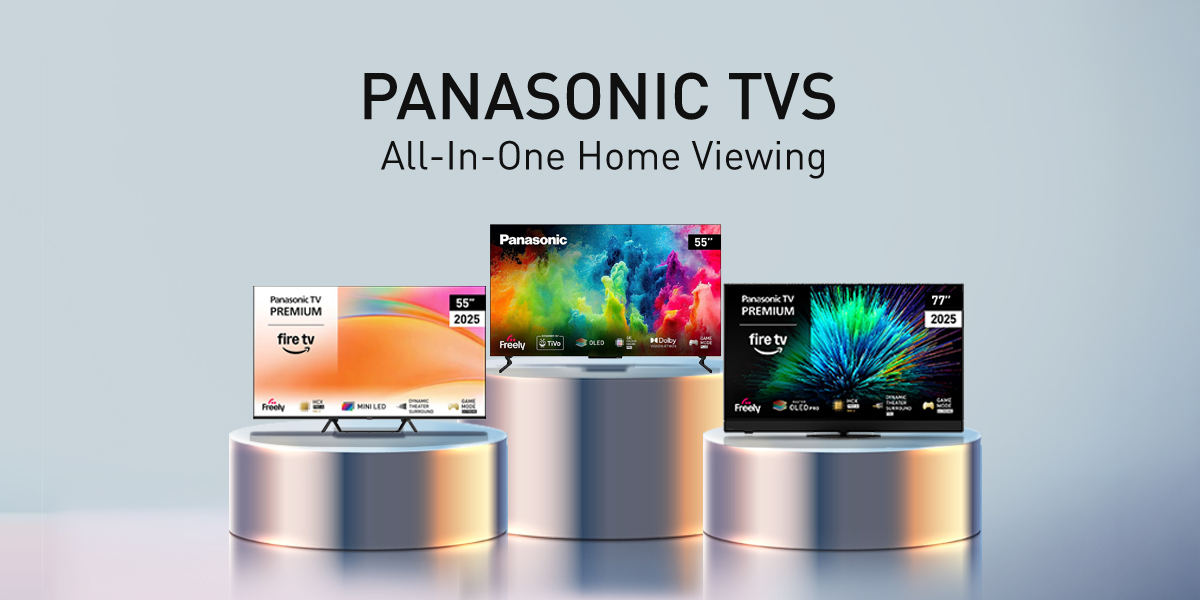
Panasonic confirmed that Chinese company Skyworth will take over production, sales, marketing, and logistics for Panasonic-branded televisions in Europe and the United States from April 2026. Panasonic will retain responsibility for design and quality control, particularly for high-end OLED models, but it will no longer carry out physical manufacturing.
The decision marks the symbolic end of an era in which Panasonic was one of the world’s most important television manufacturers – especially during the peak years of plasma technology in the 2000-10 period. At that time, the company ranked among market leaders, and its models were widely praised for image quality and innovation. However, since ending plasma TV production in 2014, Panasonic’s share of the display market has steadily declined under pressure from lower-cost, mass-market LCD and OLED products offered by South Korean and Chinese brands.
The challenges began earlier. Panasonic ended production of its own plasma panels in 2014, reflecting a broader industry shift as demand for LCD rose rapidly at the expense of plasma. A few years later, the company reduced its presence in markets such as the United States, fully withdrawing its direct TV sales there in 2016 and struggling to compete against dominant brands like Samsung and LG.
According to analysts, Panasonic has long faced shrinking market share and mounting cost pressure. Its global TV market share fell from around 20 percent several years ago to significantly lower levels, making it increasingly difficult to compete in a low-margin segment. Panasonic attempted to strengthen its position with new OLED models and technological partnerships, but pricing pressure from competitors proved stronger.
Analysis by the Financial Times suggests that transferring operations to Skyworth is not unusual in the context of Japanese companies scaling back their TV businesses. Sony recently shifted control of its TV and audio equipment business into a joint venture with Chinese manufacturer TCL, while other brands such as Sharp, Toshiba, Hitachi, and Pioneer have already exited in-house television production.
Panasonic intends to remain involved in television technology, focusing on image development and quality, particularly in the premium OLED segment, and will continue supporting devices sold through March 2026. In practice, this means Panasonic TVs will remain on the market but will be manufactured by an external partner. What the long-term impact will be remains to be seen, but it is unlikely to mark a triumphant return of Japanese manufacturers to the top tier of the global TV industry.