


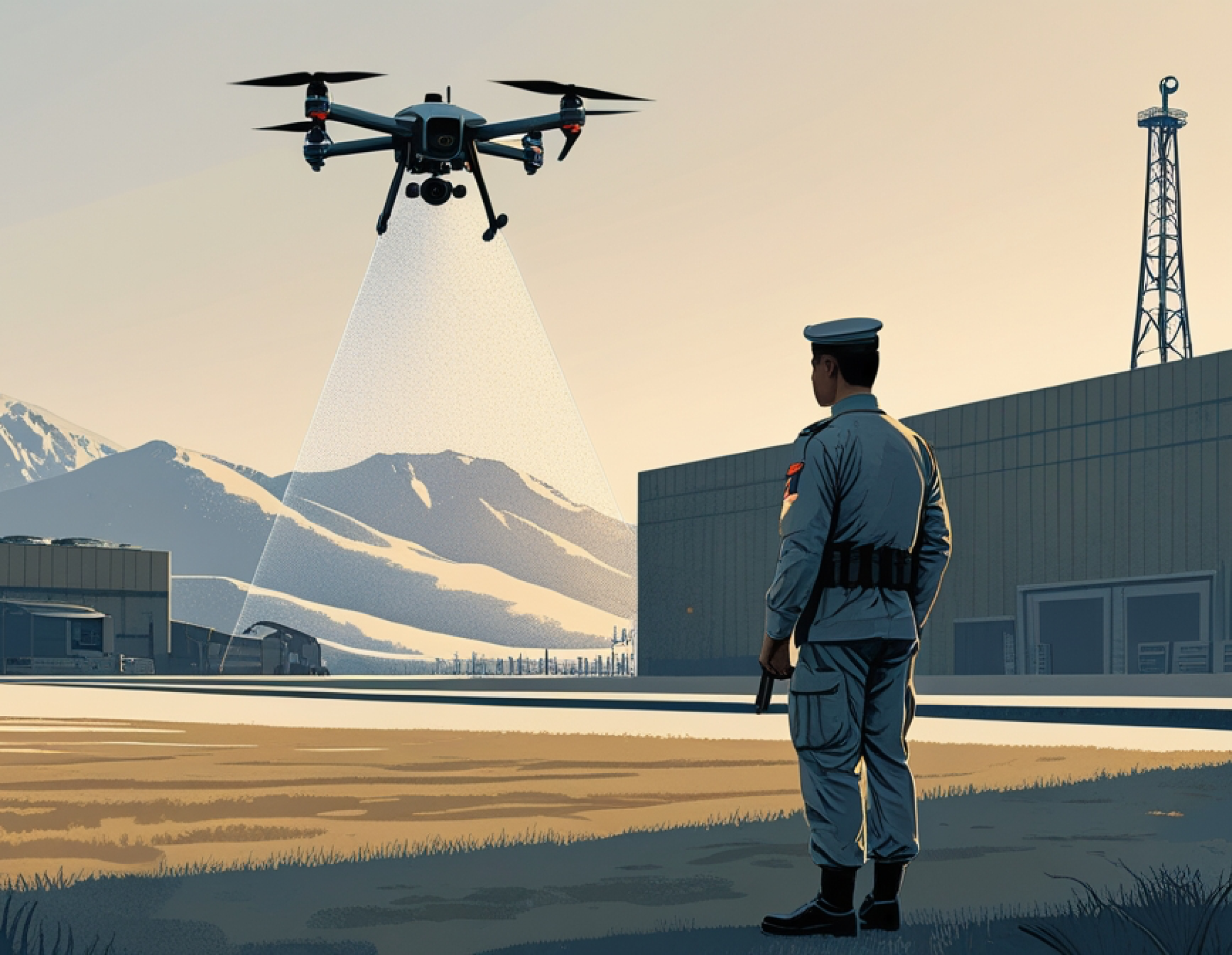
The NATO DIANA Demo Day recently took place in Warsaw as part of Defence24 Days. At the FORT Kraków event, companies developing strategically significant technologies for security and defence were showcased: autonomous systems, communications solutions, sensors, counter-drone technologies, and data integration tools.
DIANA stands for Defence Innovation Accelerator for the North Atlantic — NATO’s defence innovation accelerator. Its mission is to seek out and speed up the development of technologies that can give the Alliance a strategic edge in security and defence. NATO DIANA states that the programme provides companies with resources, networks, and mentorship to develop such technologies and bring them to deployment. In 2026, DIANA selected 150 companies from 24 NATO member states to work across ten defence and security challenge areas.
In Poland, the programme operates under the FORT Kraków brand — a joint project of AGH University of Krakow and Krakow Technology Park, established in partnership with Poland’s Ministry of National Defence and with the support of the General Staff of the Polish Armed Forces. FORT Kraków describes its role as connecting companies with military end-users, mentors, and investors to accelerate the development, validation, and adoption of innovations. The Demo Day featured companies from the United States, Greece, Poland, and the United Kingdom. At the centre of the discussion was a challenging issue for the European defence industry: ideas are there, funding is coming in, and the war has already laid out new requirements — but the procurement, integration, and production system is still moving far too slowly.
We reached out to Ben van Sleeuwen, an aerospace industry expert who attended the event and agreed to walk 2Digital News through what he saw at the Demo Day: why drones are reshaping the logic of defence procurement, what smaller companies can bring to NATO’s armed forces, where start-ups hit the wall of scale, and why Poland’s challenge is not a lack of money but a lack of risk appetite.

2Digital: You were at the FORT Kraków & NATO DIANA Demo Day and saw the start-ups first-hand. What was the most significant technological shift you picked up on?
Ben: What struck me was how rapidly the defence procurement model is shifting across Europe and across NATO as a whole — and how much further it needs to shift to keep up with the demands of the modern battlefield.
After four years of war between Russia and Ukraine, it is clear that warfare today looks very different from what NATO countries had been preparing for and procuring around for decades. The recent Iran–US conflict and the subsequent Iranian strikes across the Middle East have only accelerated the urgency for rapid innovation within the defence procurement world.
Put simply, drones have clearly become one of the leading causes of battlefield casualties. And the production cost of drones such as Iran’s Shahed is incomparably lower than the cost of the advanced weaponry, air defence systems, fighter jets, and missiles the Western world produces or has produced to date.
So the need for change is obvious. And what I saw at the NATO DIANA Demo Day was exactly that.
NATO is effectively funding and supporting the very innovations it desperately needs to accelerate, because the current defence ecosystem and traditional government suppliers are simply not delivering what is required.
2Digital: The European defence industry has historically been built around large prime contractors. What role can smaller companies realistically play alongside them?
Ben: The role of these smaller players and start-ups will clearly be to serve as rapid-prototyping organisations. They can bring innovations to the battlefield quickly — and I mean that literally: to test them out and figure out whether this is what NATO’s armies actually need right now.
There was an excellent example from one of the companies that presented at the event: Picogrid. It is a company that provides interoperability — enabling different military systems to talk to each other. Picogrid describes its work as the integration of battlefield systems; in April 2026, the company announced a contract with the U.S. Army’s XVIII Airborne Corps to accelerate the integration of such systems, including in the counter-UAS context.
One of the most striking moments during the NATO DIANA Demo Day came from Picogrid, a US defense technology startup focused on military interoperability and battlefield data orchestration. The company explained that for the past two years its team had been working directly in Ukraine alongside special forces and air-defense units, helping integrate sensors, drones, radars and command systems into a common operational network to improve air-defense coordination and reduce issues such as friendly drone-on-drone incidents.
According to Picogrid, while they were developing a NATO training module in Germany, the escalation in the Middle East triggered an immediate operational response. Within two days, the company’s lead engineer and project lead were deployed on a US Air Force C-17 transport aircraft to the region to help scale similar integrated defense capabilities alongside US Army components.
The anecdote highlighted how rapidly battlefield lessons from Ukraine are now being transferred into other geopolitical hotspots.
What we see here is the urgent need of defence organisations, governments, and NATO armies to rapidly try out and test new technologies. In real-world combat scenarios — including the Iran–US war — there simply is no time to wait for advanced air defence systems or counter-drone solutions that have to work their way through major prime contractors.
Technology moves fast — much the same way it moved fast during the First and Second World Wars.
Russia’s war against in Ukraine has now entered its fifth year, and what happens at the front has changed radically over that time. What works in Ukraine today can just as easily translate to other hotspots. Advanced air defence systems exist, yes — but we are also seeing the rapid depletion of the missile stockpiles they rely on. There is therefore enormous, I would even say desperate, demand for new ways of defending.
2Digital: In the civilian tech sector, a small team can quickly build a product that disrupts the market. In defence, it is far more complex: certification, classified requirements, procurement processes, system integration, and liability for system failure. Where can small companies genuinely break new ground in military technology today?
Ben: A very sharp point was made at the forum: there is a big difference between selling to soldiers on the ground and selling to the generals who command that ground. For the generals and commanders running the battlefield, scale matters. Full integration into the broader battlefield system matters too.
Many of these technologies will likely find their way through to a certain point. They will be trialled and tested by various forces. But a moment will come when they need to be integrated — and that is precisely where, I believe, the classical defence procurement model will still play its part.

Many of these smaller start-ups can offer the most cost-effective and most operationally effective solutions at the frontline — whether in communications, counter-drone defence, or other domains. But they will likely hit a wall when they need to scale up production to meet demand, or when they require integration into larger defence systems.
That is the point at which it becomes increasingly likely that such companies will simply be acquired once they reach a certain size.
2Digital: At the Demo Day, many discussions touched on GPS-denied operations, electronic warfare, autonomy, low-cost drones, and rapid field iteration. Which lessons from the war in Ukraine have already become baseline requirements for new defence technologies?
Ben: The terminology itself — “drone,” “artificial intelligence,” and similar buzzwords — can obviously become fashionable jargon that people just drop into their pitch decks.
But the real differentiator emerges when you can rapidly build and test the solution you are proposing, get immediate feedback, iterate your product on the basis of that feedback, and then run another quick test.
That is one of the genuine lessons being drawn from the war in Ukraine: the extraordinarily fast evolution and development of technologies that are being tried and tested in the field.
These are hard-won lessons. As your technology evolves, so does the adversary’s. The ability to quickly produce something at scale, then immediately take feedback from operators and update the software or operational capabilities — that is ultimately what matters most.
It is good to see that there are now many initiatives and events that allow this kind of learning to happen at pace.
2Digital: One of Europe’s core challenges is speed of execution: procurement, testing, scaling, and moving through to actual deployment. Where are we stuck today — military customers, regulation, prime contractors, investors, production capacity, or risk culture?
Ben: I would say all of the above.
First of all, NATO’s military customers — let’s be honest — are not the ones currently fighting the war. They are supplying Ukraine, advising Ukraine, and learning from Ukraine. Yes, the US is engaged in Iran, but that is still not the same as being in Ukraine.
Second, there is an enormous amount of regulation. And even for conventional systems, there is a shortage of production capacity.
Money is not the problem. Investors in Europe are not the problem either. There are literally hundreds of billions of euros being made available in the form of cheap loans. SAFE — Security Action for Europe — is the EU’s new €150 billion financial instrument to support joint defence procurement and investment in defence industrial production. Poland has emerged as the largest beneficiary under the programme: according to the Polish government, it stands to receive approximately €43.7 billion. Reuters reported that Poland signed its first SAFE loan agreement for €43.7 billion on 8 May 2026.
So funding and investment are not the problem. The problem is getting that money to flow into the defence industry. And today, Europe’s defence industry is largely made up of large prime contractors and large tier-one integrators. Money therefore gets absorbed easily by those tier-one integrators.
But it does not easily trickle down to innovative companies — they come up against market-entry barriers in the form of regulation, and not always the regulation itself. There was an excellent moment from a Polish legal specialist at PricewaterhouseCoopers. He said that regulation is not necessarily the main bottleneck. The real one is the pace at which administrations work, because they are short-staffed when it comes to processing licence applications and similar permits.
And finally — and this is certainly one of the biggest problems — in Europe, we are simply not used to taking risks when it comes to innovation. We tend to buy “mature” defence systems that have been in service for years and carry full certification. We are not accustomed to buying from or investing in risky start-ups.
In the United States, it is an entirely different story. There has always been a healthy start-up culture. Even today, a company like Anduril — which barely anyone had heard of ten years ago — has become a major defence contractor. Palantir — which few people knew about a few years back — is now a major player in AI services.
The US is comfortable taking risks, backing start-ups, and awarding defence contracts to unknown players far more readily than we do in Europe.
And that risk culture is definitely the biggest challenge we have in Europe.
2Digital: Dual-use is often described as technology that can serve both civilian and military purposes. But for a start-up, it can also be a survival strategy: civilian markets generate revenue while defence procurement moves slowly. Which dual-use models do you see as the most viable for defence tech?
Ben: One viable space for defence tech that I see — and it was clearly discussed at the event — is the need for civilian organisations and communities to protect themselves against drone incursions.
There is a great deal of anxiety out there today. We have all seen drone strikes in places like Dubai, Abu Dhabi, Bahrain, and Qatar. What you will now see is a massive surge in demand from, say, companies that operate wind farms, or organisations that have invested heavily in infrastructure. They simply do not want to wait for the military to come up with defensive solutions. They want to know when a drone is approaching and potentially targeting their buildings or infrastructure. So that is definitely a dual-use space.
Another area that is equally important but less talked about is ground vehicles. We talk a great deal about drones, but ultimately there will also be enormous demand on the modern battlefield for unmanned ground vehicles. This is a domain where autonomous navigation creates a major dual-use opportunity, because companies are already actively investing in autonomous navigation for civilian applications — robo-taxis, for instance.
2Digital: Which technologies from the Demo Day struck you as the most mature and closest to deployment?
Ben: The first example that stood out for me was the solution from Arcani. In essence, it is an acoustic drone detection system. Arcani describes itself as a NATO DIANA accelerator participant and developer of advanced acoustic detection technology to enhance battlefield awareness and security.
What struck me was its simplicity. An operator simply switches it on and places it where it needs to be.
Systems like this solve genuine battlefield problems: I want to know a drone is incoming, but I cannot see it on radar, and I cannot pick it up on infrared detection because it is flying too low. The one thing these drones cannot hide is the sound they produce.
This acoustic sensor developed by Arcani is an excellent system precisely because it addresses the needs of today’s battlefield. What sets it apart is that it has already been trialled and tested in various combat environments. On top of that, it is a simple system that any operator can deploy without specialist training.
The other company that stood out — as I mentioned — was Picogrid. It enables all the systems soldiers use on the battlefield to interoperate with one another. Ultimately, you need the ability to pull in as much information as possible, process that data, and turn it into actionable intelligence that supports decision-making.
Picogrid also looks thoroughly battle-tested. They have been working in Ukraine alongside the Ukrainian army and have secured their first contracts with the US government. In April 2026, the company announced a contract with the U.S. Army’s XVIII Airborne Corps, and in May 2026 it announced participation in the U.S. Army “Right to Integrate” Sprint at Fort Carson, focused on vendor-neutral interoperability.
2Digital: In the aerospace industry, it has long been understood that the winner is not the company that builds one impressive component, but the one that can assemble a reliable, certifiable, and maintainable system. Do you see a similar shift in defence — one that mirrors the systems integration model of aerospace?
Ben: Yes, absolutely. Ultimately, if you want to remain relevant to a government, an army, or a navy, you need that capability.
That is where I see many of these start-ups eventually ending up. They will ultimately be absorbed by larger players, because you eventually need not just the ability to produce the technology, but to scale it, sustain it, and — if it stays in service for ten years — to upgrade it.
2Digital: FORT Kraków is part of the NATO DIANA network and has been called Poland’s NATO defence innovation accelerator. Can Poland become one of the key defence innovation hubs on NATO’s eastern flank?
Ben: This is where I simply did not come away with the impression that this is actually happening. Yes, we see enormous sums of money being spent on defence in Poland. And yes, we see people who are passionate and bringing ideas to the table.
But what is clearly missing is risk appetite.
There was a very good explanation from one of the speakers. Ten years ago, corruption was rooted out and transparency was introduced. There is now a single procurement agency and everything is above board. But that also means contracts are very rigid and long-term.
This only works in favour of large procurement contractors — Polish or otherwise. It is very hard for start-ups to gain a foothold and break through the barrier of market recognition.
So on one hand, all the potential is there. But what is genuinely lacking is risk appetite within Poland’s defence sector.
If that can change — if the government is prepared to take risks, back start-ups, and embrace the straightforward approach that exists in the US, where you fund ten companies and if just one succeeds, you have a winner — then yes, Poland can become a defence innovation accelerator.
Unfortunately, though, I think the conclusion that many people in that room would draw today is that it is not there yet.
2Digital: Who will win in European defence tech over the next decade?
Ben: To answer that question, I would use Anduril as the prime example.
Anduril in the US approached defence solutions with a software mindset — as a technology company moving into defence. It is a company that brings, first and foremost, best-in-class software, and second, the ability to deliver platforms alongside it. It also brings a far faster approach to scaling and, ultimately, the ability to design, develop, and deliver.
Time will tell whether that truly holds up now that they have secured multi-billion-dollar government contracts.
For the larger incumbents, there will always be a place, because the overwhelming share of funding — whether within NATO or elsewhere — continues to flow into traditional systems: tanks, fighter jets, munitions, and missiles. Those companies will carry on being successful.
But the companies that can rapidly bring innovations to market, scale them up, and draw on the right supporting industrial base — one that keeps delivering regardless of geopolitical constraints — will be the ones that come out on top.
2Digital: What does NATO DIANA reveal about US–Europe defence cooperation?
Ben: NATO is a coalition of the United States and many European countries.
The NATO DIANA network is a great example of Americans and Europeans working together to accelerate innovation. There are Americans actively embedded in Ukraine, working alongside the Ukrainian army. There are Europeans working with the US Army.
So the reality remains: the US and Europe continue to work together — whether through start-ups or around contemporary defence requirements.
Even with SAFE — the Security Action for Europe programme — requiring that 65% of defence funding be spent within SAFE countries, predominantly European nations rather than the US, you will still see many American companies partnering with European ones to bring their technologies to market and take advantage of that funding.
Yes, SAFE money will benefit Europe by helping build out greater defence capabilities. But despite all the high-level political positioning from the Trump administration and certain players in Europe, I still believe the reality is one of active cooperation and a strong alliance — certainly from the standpoint of defence business within NATO.